
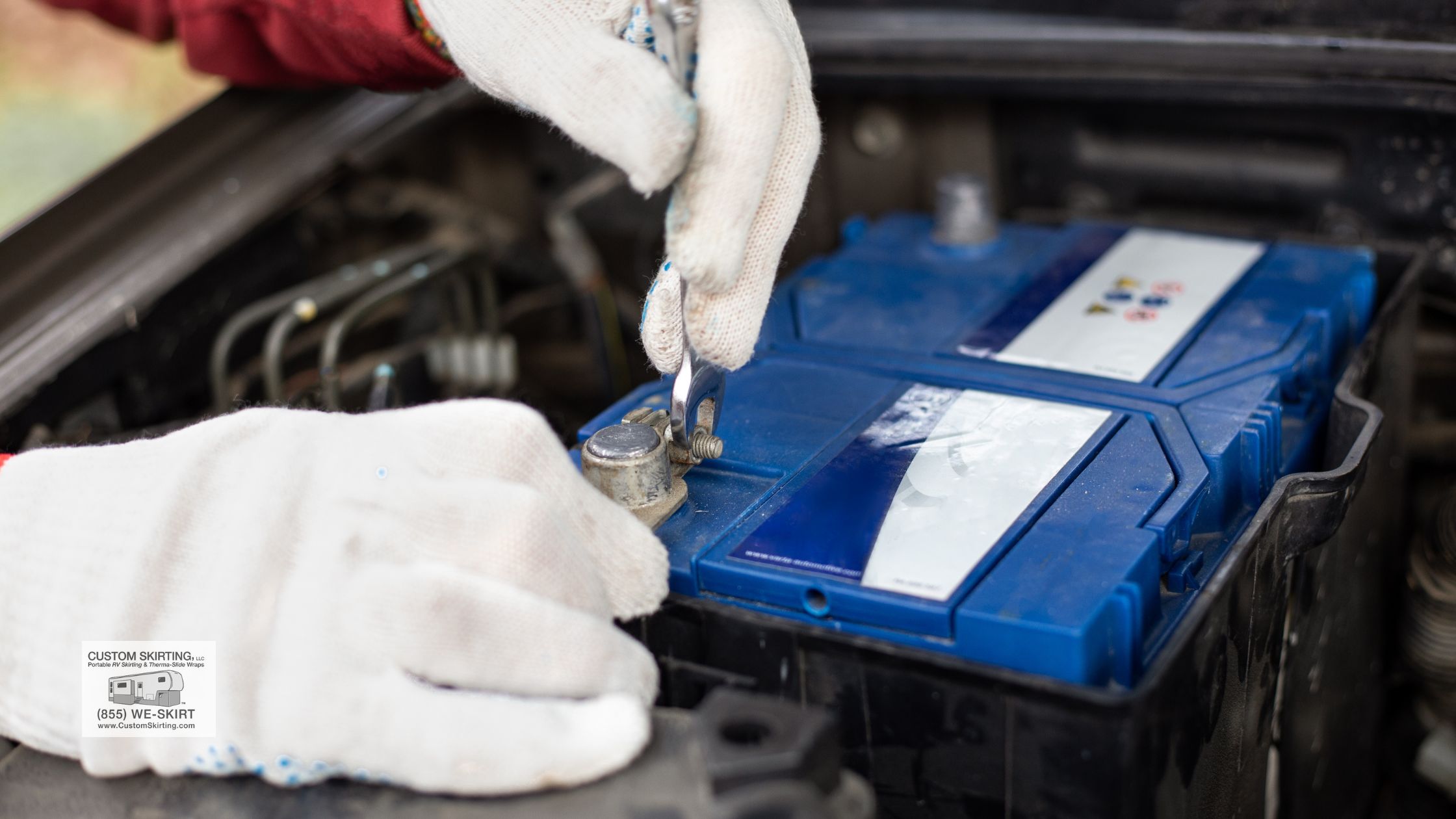
What Is The Best Battery For My RV?
Table of contents
Are you tired of power failures ruining your camping trips? Choosing the best RV battery is crucial for a successful adventure on the road. Unfortunately, approximately 75% of RV owners have incorrect batteries for their specific needs, leading to frustrating power outages at the most inconvenient times. Whether you’re a weekend camper, seasonal traveler, full-time RVer, or boondocking enthusiast, understanding your power requirements and selecting the best battery for RV use can make or break your experience.
This comprehensive guide will help you navigate the complex world of camper/RV batteries, covering everything from basic battery types to top recommendations and important buying considerations. By the end, you’ll have all the knowledge needed to select the best RV batteries for your specific camping style and power needs.
Understanding RV Battery Basics
Why RVs Need Special Batteries
Your RV isn’t just a vehicle—it’s a mobile home equipped with numerous amenities that require reliable power. Standard automotive batteries simply won’t cut it for RV applications. While car batteries are designed for short bursts of high current to start engines, RVs need batteries that can provide steady power over extended periods.
Most RV/camper systems operate on 12V power, requiring deep cycle batteries that can handle being discharged and recharged repeatedly. Unlike starting batteries, deep cycle batteries are specifically engineered to provide consistent power over longer periods and can withstand deeper discharge cycles without damage. This fundamental difference is why choosing the best RV/camper battery requires understanding the unique demands of recreational vehicles.
Critical RV Systems Powered by Batteries
When you’re camping without hookups, your battery becomes the lifeline for numerous essential systems:
- Propane refrigerator controllers
- Furnace thermostats and blowers
- Water pumps
- Interior and exterior lighting
- Slide-out mechanisms
- Tongue jacks and leveling systems
- Electric awnings
- Entertainment systems
These systems can quickly drain battery power, especially when boondocking (camping without electrical hookups). Having sufficient battery capacity isn’t just about comfort—it’s about safety and functionality. The best battery for RV use will provide reliable power to all these systems when you need them most.
Types of RV Batteries
Flooded Lead-Acid Batteries (FLA/SLA)
Flooded lead-acid batteries represent the traditional, budget-friendly option for RV power. These batteries contain lead plates submerged in a liquid electrolyte solution (sulfuric acid and water).
Pros:
- Most affordable initial investment ($80-$200 for a typical 12V battery)
- Widely available and easy to replace
- Proven technology with decades of reliability
Cons:
- Require regular maintenance (water additions every 2-4 weeks during heavy use)
- Must be installed upright to prevent acid leakage
- Need proper ventilation to release hydrogen gas during charging
- Can only be discharged to about 50% without damage
- Heavier than alternative options (typically 60-70 lbs for a 100Ah battery)
- Shorter lifespan (2-5 years with proper maintenance)
Flooded lead-acid batteries remain popular among budget-conscious RVers and those who don’t mind performing regular maintenance. They’re particularly suitable for weekend campers who primarily stay at campgrounds with electrical hookups.
Absorbed Glass Mat (AGM) Batteries
AGM batteries represent a significant upgrade from traditional flooded lead-acid options. In these batteries, the electrolyte is absorbed in fiberglass mats placed between the lead plates, creating a sealed, maintenance-free design.
Pros:
- No maintenance required (no water additions)
- Can be mounted in any position (except upside down)
- No ventilation requirements
- Better performance in cold weather
- Higher resistance to vibration
- Faster charging than flooded lead-acid
- Longer lifespan (3-7 years)
Cons:
- Higher upfront cost ($200-$350 for a typical 100Ah battery)
- Still limited to about 50-70% discharge depth
- Heavier than lithium options
AGM batteries have become increasingly popular among RVers seeking a balance between performance and price. They’re an excellent choice for those who want to upgrade from flooded lead-acid without making a significant investment in lithium technology. For many RVers, AGM batteries represent the best battery for RV applications when considering the balance of cost, performance, and maintenance.
Gel Cell Batteries
Gel cell batteries are another type of sealed lead-acid battery where the electrolyte is suspended in a gel form. This design prevents spillage and provides excellent vibration resistance.
Pros:
- No maintenance required
- No ventilation needs
- Excellent deep cycle capabilities
- Good performance in extreme temperatures
- Resistant to vibration and shock
- Longer lifespan than flooded lead-acid (4-8 years)
Cons:
- Specific charging requirements (can be damaged by improper charging)
- Higher cost than AGM batteries
- Typically heavier than lithium options
- Limited discharge depth (50-70%)
- Slower charging than AGM or lithium
Gel batteries are less common in RV applications than AGM or lithium options but can be a good choice for specific situations where extreme temperature resistance is needed.
Lithium Iron Phosphate (LiFePO4) Batteries
LiFePO4 batteries represent the premium option for RV use and are increasingly considered the best RV battery choice for serious campers. These advanced batteries use lithium iron phosphate chemistry to provide exceptional performance and longevity.
Pros:
- Lightweight (typically half the weight of lead-acid)
- Exceptional lifespan (8-10+ years)
- Can be discharged up to 80-100% without damage
- Maintenance-free operation
- Faster charging
- Consistent power output throughout discharge cycle
- Built-in Battery Management Systems (BMS) for protection
- 2,000-5,000+ cycle life
Cons:
- Higher upfront cost ($700-$1,200 for a typical 100Ah battery)
- Temperature sensitivity (most cannot charge below freezing)
- Potential compatibility issues with some RV charging systems
- May require upgrades to existing charging infrastructure
For full-time RVers, frequent boondockers, and those seeking the best performance regardless of price, lithium batteries have become the gold standard. Their longer lifespan and deeper discharge capability often justify the higher initial investment for serious RV enthusiasts.
How to Choose The Best RV Battery?
Choosing the best RV battery is crucial for ensuring a smooth and uninterrupted journey on the road. To help you make the right decision, here’s an in-depth guide on how to select the optimal RV battery tailored to your specific needs:
1. Determine Power Needs
Before choosing an RV battery, it’s essential to calculate the total power consumption of your RV appliances. Make a list of all the devices and systems you’ll be using, along with their power requirements in watts or amps. This includes lights, refrigerators, water pumps, entertainment systems, and any other electrical devices.
Once you have a comprehensive list, estimate the total power consumption per day by adding up the individual power requirements. Consider factors such as how frequently each device will be used and their average power consumption during operation. This will give you an idea of the daily energy usage of your RV.
2. Battery Bank Size
Based on your calculated power needs, determine the appropriate size of your battery bank to ensure sufficient energy storage. The size of your battery bank is determined by both the capacity of each battery and the number of batteries in the bank.
To calculate the required capacity of your battery bank, multiply the daily energy usage of your RV (in watt-hours) by the desired number of days of autonomy (i.e., how many days you want the batteries to last without recharging). Divide this value by the nominal voltage of the batteries (usually 12 volts for RV batteries) to get the total amp-hour capacity needed.
For example, if your daily energy usage is 1500 watt-hours and you want your batteries to last for three days without recharging, and you’re using 12-volt batteries, the required capacity would be:
(1500 Wh/day) * (3 days) / (12 volts) = 375 Ah
Ensure that the size of your battery bank can accommodate this calculated capacity, taking into account any space limitations in your RV.
3. Number of Batteries
Once you’ve determined the required capacity, assess whether a single battery or a battery bank comprising multiple units is necessary to meet your energy needs effectively. Factors to consider include available space in your RV, weight restrictions, and budget considerations.
If space and weight are not limiting factors, opting for a larger battery bank with multiple batteries can provide greater energy storage capacity and extend the time between recharges. However, if space is limited or you’re looking for a more budget-friendly option, a single battery may suffice, provided it has adequate capacity to meet your power needs.
Additionally, consider the type of battery chemistry that best suits your requirements (e.g., lead-acid, lithium, gel) based on factors such as lifespan, charging efficiency, and maintenance requirements.
By carefully considering these factors and conducting thorough research, you can confidently choose the best RV/camper battery that meets your specific needs and ensures a reliable power supply for your adventures on the road.
Top Picks for The Best RV Batteries
Best Overall: Battle Born 12V 100Ah LiFePO4 Deep Cycle Battery
The Battle Born LiFePO4 battery has earned its reputation as the best overall RV battery, especially for dry camping and boondocking enthusiasts. This American-made battery combines cutting-edge technology with exceptional reliability.
Specifications:
- Capacity: 100Ah
- Voltage: 12V
- Weight: Approximately 29 lbs
- Dimensions: 12.75″ x 6.88″ x 9″
- Price range: $900-$1,000
Features:
- Built-in Battery Management System (BMS) that protects against common causes of battery failure
- 3,000-5,000 cycle life (compared to 300-500 for lead-acid)
- 10-year warranty
- Can be discharged to 100% without damage
- Compatible with most RV charging systems
- Operates in temperatures from -4°F to 135°F
The Battle Born battery’s exceptional performance comes from its advanced lithium iron phosphate chemistry and sophisticated BMS. While the upfront cost is significant, the battery’s long lifespan, minimal maintenance requirements, and superior performance make it the best RV battery for serious campers who need reliable power in off-grid situations.
Best Budget Option: Renogy Deep Cycle AGM Battery
For RVers seeking quality power without breaking the bank, the Renogy Deep Cycle AGM Battery offers excellent value.
Specifications:
- Capacity: 100Ah
- Voltage: 12V
- Weight: Approximately 60 lbs
- Dimensions: 13″ x 6.8″ x 8.7″
- Price range: $200-$250
Features:
- Maintenance-free design
- Good performance in a wide temperature range
- 300-400 cycle life when discharged to 50%
- Excellent vibration resistance
- Low self-discharge rate
- 2-year warranty
The Renogy AGM battery provides a good balance of performance and affordability, making it an excellent choice for weekend campers or those who primarily stay at campgrounds with hookups. While it doesn’t offer the same lifespan or depth of discharge as lithium options, it delivers reliable power at a fraction of the cost, earning its place among the best RV/camper batteries for budget-conscious travelers.
Best Value: Interstate Batteries 12V 110Ah AGM Deep Cycle Battery
Interstate Batteries has built a strong reputation for reliability, and their AGM Deep Cycle Battery offers excellent value for money.
Specifications:
- Capacity: 110Ah
- Voltage: 12V
- Weight: Approximately 65 lbs
- Dimensions: 12.9″ x 6.8″ x 8.7″
- Price range: $250-$300
Features:
- Reputation for reliability
- Vibration resistance
- Maintenance-free operation
- Good cold-weather performance
- 400-500 cycle life at 50% depth of discharge
- 12-month free replacement warranty
The Interstate AGM battery represents a good middle ground between budget options and premium lithium batteries. Its slightly higher capacity (110Ah vs. the standard 100Ah) provides extra runtime for essential systems, making it one of the best camper battery choices for a wide range of RV users.
Best for Full-Time RVers: LiTime 12V 100Ah LiFePO4 Battery
Full-time RVers need reliable, long-lasting power, and the LiTime LiFePO4 Battery delivers exceptional performance for extended off-grid living.
Specifications:
- Capacity: 100Ah
- Voltage: 12V
- Weight: Approximately 26 lbs
- Dimensions: 12.8″ x 6.8″ x 8.3″
- Price range: $700-$800
Features:
- Built-in BMS with Bluetooth monitoring
- 4,000+ cycle life
- Fast charging capability
- 10-year warranty
- Lightweight design
- Operating temperature range: -4°F to 140°F
The LiTime battery’s Bluetooth monitoring feature allows users to check battery status from their smartphones, making it easier to manage power consumption. Its lightweight design and high capacity make it ideal for those who spend extended periods off-grid, earning its place among the best RV/camper batteries for full-time travelers.
Best Premium Option: Rolls Surrette Deep Cycle Battery
For those seeking the ultimate in traditional battery technology, the Rolls Surrette Deep Cycle Battery offers exceptional quality and longevity.
Specifications:
- Available in various capacities (typically 200-400Ah)
- 6V (used in pairs for 12V systems)
- Weight: Heavy (60-120 lbs depending on model)
- Price range: $350-$600 per battery
Features:
- Thicker plates than standard batteries
- Longer cycle life than typical flooded batteries (7-10 years with proper maintenance)
- Reputation for reliability in off-grid applications
- Excellent performance in extreme conditions
- Made in North America
While Rolls Surrette batteries require maintenance and are significantly heavier than lithium options, their exceptional durability makes them a favorite among experienced boondockers who prefer traditional battery technology. For those willing to perform regular maintenance, these batteries can provide some of the best value over their extended lifespan.
Battery Charging and Maintenance
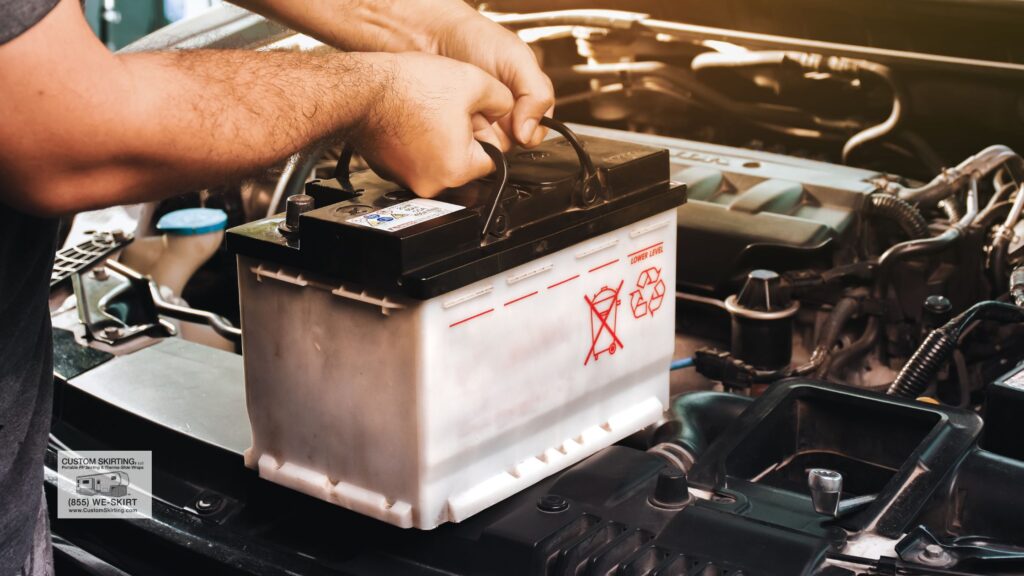
Charging Methods for RV Batteries
Proper charging is essential for maximizing the lifespan of the best RV batteries. Several methods are available:
Converter/Charger (Shore Power)
- Most convenient when connected to electrical hookups
- Modern “smart” converters have multiple charging stages for optimal battery care
- Different battery types require specific charging profiles
- Lithium batteries often need converters with adjustable charging parameters
Alternator Charging
- Charges batteries while driving
- Standard alternators are designed for starting batteries, not deep cycle
- DC-DC chargers can optimize alternator charging for deep cycle batteries
- Particularly important for lithium batteries, which need controlled charging
Generator Charging
- Provides independence from shore power
- Fuel consumption and noise are considerations
- Size generator appropriately for your battery bank and charger
- Run time affects charging efficiency
Solar Charging
- Environmentally friendly and silent
- Requires sufficient panel capacity and sun exposure
- Solar charge controllers must be compatible with your battery type
- Particularly effective with lithium batteries due to their faster charging capability
For optimal battery life, use chargers specifically designed for your battery type. This is especially important for lithium batteries, which require precise voltage control and protection circuits.
Maintenance Requirements by Battery Type
Different battery types have vastly different maintenance needs:
Flooded Lead-Acid
- Check water levels every 2-4 weeks during heavy use
- Add distilled water as needed (never tap water)
- Clean terminals regularly to prevent corrosion
- Perform specific gravity testing quarterly
- Equalization charging periodically
- Keep batteries charged; avoid leaving discharged
AGM and Gel
- Minimal maintenance requirements
- Check terminals for corrosion periodically
- Ensure proper charging voltage (particularly important for gel)
- Keep batteries charged; avoid leaving discharged
- No water additions or specific gravity testing needed
Lithium (LiFePO4)
- Essentially maintenance-free
- No regular maintenance tasks required
- Monitor for proper charging system operation
- Most have built-in BMS to prevent damage
- Temperature considerations (avoid charging below freezing)
Seasonal Maintenance Tips:
- Before storage: Fully charge batteries
- During storage: Disconnect batteries or use a maintenance charger
- For winter: Remove flooded batteries from RV if storing in freezing conditions
- For summer: Ensure adequate ventilation to prevent overheating
Proper maintenance significantly extends battery life, making even budget options perform better over time. The best RV batteries will last longer and perform more reliably with appropriate care.
Installation and Physical Considerations
Battery Compartment Constraints
RV battery compartments can limit your options when selecting the best RV/camper battery for your vehicle. Standard battery compartments are designed for traditional Group 24, 27, or 31 batteries, with dimensions approximately:
- Group 24: 10.25″ × 6.8″ × 8.9″
- Group 27: 12.1″ × 6.8″ × 8.9″
- Group 31: 13″ × 6.8″ × 9.4″
To ensure proper fit:
- Measure your compartment’s dimensions
- Account for terminal height and orientation
- Consider ventilation requirements
- Check weight limits for mounting locations
Ventilation requirements vary by battery type:
- Flooded lead-acid: Require significant ventilation to release hydrogen gas
- AGM and gel: Minimal ventilation needed
- Lithium: Minimal ventilation needed but may require temperature management
Weight distribution is particularly important when upgrading batteries. Lithium batteries weigh roughly half as much as lead-acid batteries of equivalent capacity, which can affect your RV’s balance and handling if you’re replacing multiple batteries.
For those looking to upgrade to the best RV batteries with larger capacity, you may need to consider alternative mounting locations or compartment modifications, always ensuring proper security and ventilation.
Battery Bank Configuration
For increased capacity or voltage, multiple batteries can be connected in different configurations:
Series Connection (Increases Voltage)
- Connect positive terminal of one battery to negative terminal of another
- Voltages add (two 6V batteries in series = 12V)
- Capacity remains the same as a single battery
- Used primarily with 6V batteries to create 12V systems
Parallel Connection (Increases Capacity)
- Connect positive terminals together and negative terminals together
- Voltage remains the same
- Capacities add (two 100Ah batteries in parallel = 200Ah)
- Common configuration for expanding capacity
Series-Parallel Connection (Increases Both)
- Combination of series and parallel connections
- Can achieve higher voltage and capacity
- More complex to manage
- Requires careful battery matching
When creating a battery bank:
- Use batteries of the same type, age, and capacity
- Use identical cable lengths and gauges for parallel connections
- Ensure all batteries receive equal charging
- Consider using battery balancers for large banks
Proper cable sizing is crucial for safety and performance. For most RV/camper applications with multiple batteries, 2/0 AWG or 4/0 AWG cables are recommended for main connections, with appropriate fusing for protection.
Protect Your RV Battery Investment with Custom Skirting
Your RV/camper battery performance is directly affected by temperature fluctuations. Custom Skirting helps regulate your RV’s temperature, reducing the strain on your batteries and extending their lifespan. Our exclusive “No-Snap, No-Gap” channel system provides superior protection against harsh weather conditions that can impact battery performance.
When you invest in the best RV battery for your adventures, protect that investment with Custom Skirting’s custom-tailored solutions. Our team will blueprint and create skirting specifically for your RV on-site, ensuring a perfect fit that maximizes energy efficiency. With over a decade of testing in the harshest winter conditions across North America, our skirting has proven to be the top choice for serious RV enthusiasts.
Don’t compromise on protection for your RV’s vital systems. Get Custom Skirting today and experience the difference proper temperature regulation makes for your battery performance and overall RV comfort!