
How Wide Is a Fifth Wheel Camper: Complete Dimensions Guide
Table of contents
- Standard Width Dimensions of Fifth Wheel Campers
- Width with Slide-Outs Extended
- Legal Width Restrictions for Fifth Wheels
- Popular Fifth Wheel Models and Their Width Specifications
- How Width Relates to Other Fifth Wheel Dimensions
- Practical Considerations for Fifth Wheel Width
- Tow Vehicle Compatibility with Fifth Wheel Width
- Tips for Managing Fifth Wheel Width
- Conclusion
- Experience the Nation’s #1 RV Skirting Solution!
- Related Articles
Understanding how wide is a fifth wheel camper is crucial for both prospective buyers and current owners. Most fifth wheel campers have a standard width between 8 feet (96 inches) and 8.5 feet (102 inches), designed to comply with federal highway regulations. However, knowing both the travel width and extended width (with slide-outs) is essential for proper planning. If you’re wondering how wide is a 5th wheel camper or how wide are 5th wheel campers are in general, this comprehensive guide will address everything from standard dimensions to legal restrictions and practical considerations for fifth wheel ownership.
Standard Width Dimensions of Fifth Wheel Campers
When discussing how wide are 5th wheel campers, it’s important to understand that most manufacturers follow standard dimensions to ensure road legality. The typical exterior width of a fifth wheel ranges between 8 feet (96 inches) and 8.5 feet (102 inches). This standardization exists primarily to comply with federal highway regulations that limit vehicle width on interstate highways.
Fifth wheels generally share similar widths with other RV types, though they often make more efficient use of their dimensions thanks to their unique design. Many manufacturers offer “wide-body” fifth wheels that measure closer to the maximum 102-inch width. These wider models provide several advantages:
- More spacious interior floor plans
- Wider hallways for easier movement
- Additional room for amenities and storage
- Greater comfort for full-time living
When comparing different models, you’ll notice that luxury fifth wheels often maximize the allowable width to create more comfortable living spaces, while more budget-friendly options may have slightly narrower profiles to reduce weight and improve fuel efficiency during towing. Understanding how wide are 5th wheel campers can help you choose a model that balances comfort, practicality, and towing requirements.
Width with Slide-Outs Extended
A critical aspect of understanding how wide are 5th wheel campers is recognizing that the travel width differs significantly from the parked width when slide-outs are extended. With slide-outs deployed, a fifth wheel’s width can expand dramatically to 12-16 feet depending on the model and number of slide-outs.
Typical slide-outs extend 1 to 1.5 feet on each side of the RV, with some luxury models featuring even deeper extensions. This expanded footprint has important implications for:
- Campsite selection and reservations
- Clearance around the RV when parked
- Awning and outdoor living space planning
- Overall stability in various weather conditions
Different slide-out configurations affect the overall width in unique ways:
- Single-side slide-outs: All extensions on one side, creating an asymmetrical footprint
- Opposing slide-outs: Extensions on both sides, creating a more balanced but wider overall footprint
- Multiple slide-outs: Some luxury models feature 3-5 slide-outs, dramatically increasing the extended width
Understanding how wide are 5th wheel campers both in transit and when parked is essential for safe maneuvering, campsite selection, and optimizing your outdoor living setup. When researching RV sizes, length, width, and height, always consider both the travel dimensions and the expanded dimensions to ensure your camping destinations can accommodate your specific fifth wheel model.
Legal Width Restrictions for Fifth Wheels
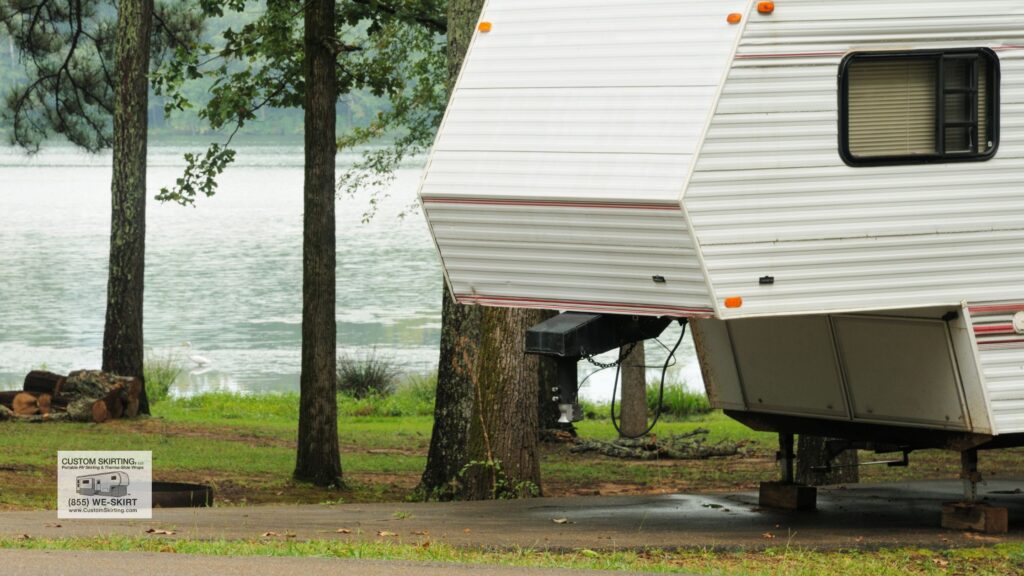
Understanding the legal aspects of how wide a 5th wheel is essential for safe and lawful travel. The federal maximum width restriction for vehicles on interstate highways without special permits is 8.5 feet (102 inches). These restrictions exist for several important reasons:
- Safety considerations for passing vehicles
- Compatibility with lane widths
- Bridge and tunnel clearance requirements
- Standardization of road infrastructure
While federal regulations apply to interstate highways, some states may have different rules for non-interstate roads. If your fifth wheel exceeds the standard width limitations, you may need to obtain special wide-load permits, which can be costly and restrict when and where you can travel.
For RVers planning international trips, it’s important to consider how wide 5th wheel campers can be in other countries. Canada generally follows similar width restrictions to the United States, while Mexico may have different regulations and road conditions that make traveling with wider vehicles more challenging. Always research the specific requirements for any country you plan to visit with your fifth wheel.
Popular Fifth Wheel Models and Their Width Specifications
To provide a clearer picture of how wide is a fifth wheel camper across different manufacturers and price points, let’s examine some popular models and their specific dimensions.
Forest River Arctic Wolf
- Standard Width: 96 inches (8 feet)
- Number of Slide-Outs: Typically 2-3 depending on floor plan
- Expanded Width: Approximately 13-14 feet with slide-outs extended
The Arctic Wolf is known for its efficient use of space despite having a slightly narrower body than some competitors. Its slide-outs are strategically placed to maximize interior living space while maintaining a more manageable overall width for travel through narrower roads and campgrounds.
Cedar Creek Silverback
- Standard Width: 102 inches (8.5 feet)
- Number of Slide-Outs: Up to 4 slide-outs in larger floor plans
- Expanded Width: Approximately 15-16 feet with all slide-outs extended
The Cedar Creek Silverback utilizes the maximum legal width to create a spacious interior. This wider body design contributes to its reputation for residential-style comfort, with wider hallways and more generous room dimensions even before considering the additional space from slide-outs.
Keystone Montana
- Standard Width: 100 inches (8.33 feet)
- Number of Slide-Outs: 3-5 depending on floor plan
- Expanded Width: 14-16 feet with slide-outs extended
The Keystone Montana is one of the most popular luxury fifth wheels on the market, and its dimensions reflect its upscale positioning. The nearly maximum-width body combined with multiple deep slide-outs creates one of the most spacious interiors available in a towable RV.
Coachmen Chaparral
- Standard Width: 96 inches (8 feet)
- Number of Slide-Outs: Typically 3-4
- Expanded Width: Approximately 14-15 feet
The Coachmen Chaparral represents a mid-range option that balances interior space with towability. Its slightly narrower body makes it more manageable for those new to towing larger RVs, while still providing ample living space when parked with slide-outs extended.
Riverstone
- Standard Width: 102 inches (8.5 feet)
- Number of Slide-Outs: Up to 5 in larger floor plans
- Expanded Width: Approximately 16 feet
The Riverstone exemplifies how manufacturers maximize both legal width limits and slide-out technology to create extraordinarily spacious interiors. This model pushes the boundaries of how wide is a 5th wheel camper when fully set up, creating living spaces that rival many stationary homes.
How Width Relates to Other Fifth Wheel Dimensions
When considering how wide is a fifth wheel, it’s important to understand how this dimension relates to other key measurements. Fifth wheels typically range in length from under 20 feet to 49 feet, with width-to-length ratios affecting overall stability and maneuverability.
The standard height range for fifth wheels is between 11’6″ and 13’5″, with width and height together determining interior volume and headroom. These combined dimensions significantly impact:
- Towing dynamics and handling
- Wind resistance and fuel efficiency
- Storage requirements
- Accessibility to certain campgrounds and routes
Width also plays a crucial role in weight distribution and center of gravity. Wider fifth wheels generally offer better stability when properly loaded, as the weight is distributed across a broader base. However, this increased width can also create more wind resistance during travel, potentially affecting fuel economy and handling in crosswinds.
For those interested in living in an RV during winter, understanding the relationship between width and other dimensions becomes even more important, as proper insulation and heat distribution are affected by the overall shape and size of the living space.
Practical Considerations for Fifth Wheel Width
Understanding how wide is a fifth wheel camper has several practical implications for owners. These considerations should factor into your purchase decision and travel planning.
Storage Requirements
Standard residential garages typically cannot accommodate fifth wheels due to their width. Most fifth wheels require:
- Specialized RV storage facilities
- Wide driveways or property with sufficient space
- Consideration of height clearance in addition to width
- Protection from the elements with appropriate RV covers if stored outdoors
Navigation Challenges
The width of a fifth wheel creates specific challenges when traveling:
- Narrow roads and bridges may be difficult or impossible to navigate
- Urban areas with tight turns require careful planning
- Wind affects wider vehicles more significantly
- Side clearance becomes more critical when passing obstacles
Route Planning
Before traveling with a fifth wheel, especially a wider model, route planning should include:
- Checking for width restrictions on planned routes
- Identifying alternative routes for narrow sections
- Understanding bridge and tunnel clearances
- Using RV-specific GPS systems that account for vehicle dimensions
Campground Considerations
Not all campgrounds can accommodate the full width of a fifth wheel with extended slide-outs, which is why knowing how wide are 5th wheel campers is essential before planning your stay.:
- Older campgrounds often have narrower sites
- Trees and other natural features may limit usable width
- Some premium sites are designed specifically for larger RVs
- Reservation systems may not always account for extended width needs
Understanding these practical considerations helps ensure that your fifth wheel’s width won’t become a limitation on your travel experiences or create unexpected challenges.
Tow Vehicle Compatibility with Fifth Wheel Width
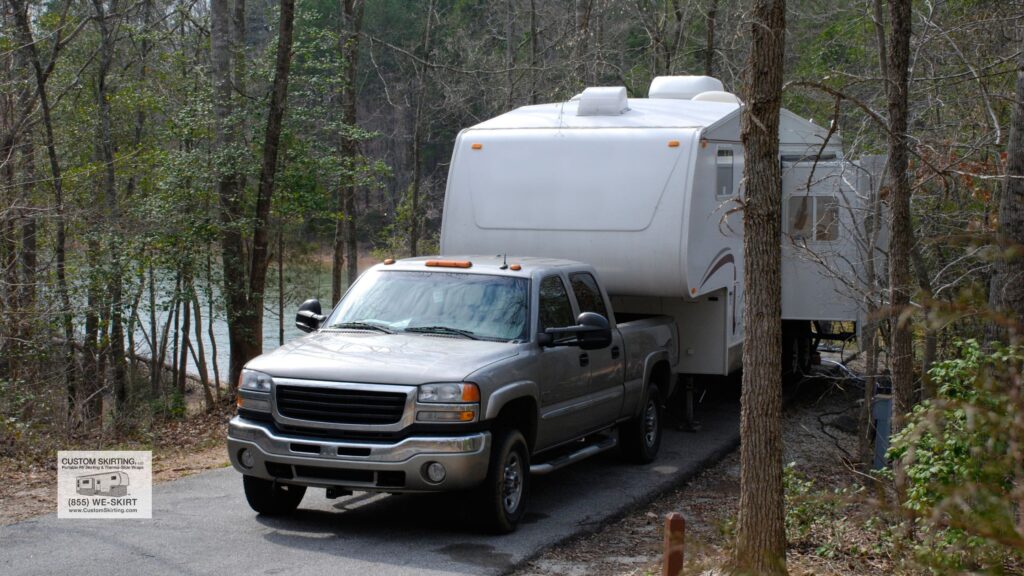
The width of your fifth wheel directly impacts tow vehicle requirements and setup. When considering how wide is a 5th wheel camper in relation to your towing setup, several factors come into play.
Towing Mirrors
Most standard vehicle mirrors don’t provide adequate visibility around a fifth wheel’s width. Extended or towing mirrors are essential for:
- Seeing traffic in adjacent lanes
- Monitoring the sides of your fifth wheel while in motion
- Safely changing lanes and maneuvering
- Backing into campsites with proper visibility
Hitch Configurations
The width of your fifth wheel affects hitch selection and setup:
- Wider fifth wheels may benefit from sliding hitches for tight turns
- Weight distribution becomes more critical with wider models
- Turning clearance between the truck cab and fifth wheel front cap
Payload and Towing Capacity
Wider fifth wheels typically weigh more, affecting:
- Pin weight (the downward force on the truck bed)
- Overall towing capacity requirements
- Truck suspension and tire load ratings
- Braking system demands
For those researching how to choose the best 5th wheel trailer hitch, understanding the relationship between width and other dimensions is crucial for selecting the appropriate towing equipment.
Visibility and Control
The width of a fifth wheel creates specific visibility challenges:
- Blind spots are larger with wider models
- Side-to-side movement may be more pronounced in crosswinds
- Passing and being passed by other vehicles requires more attention
- Backing maneuvers become more complex with wider units
Aftermarket accessories like wireless camera systems, enhanced stabilizers, and wind deflectors can help address some of these challenges associated with towing wider fifth wheels.
Tips for Managing Fifth Wheel Width
Managing the width of your fifth wheel requires specific strategies and techniques. Here are practical tips for dealing with the challenges related to how wide is a fifth wheel camper:
Accurate Measurement
Before purchasing or traveling with a fifth wheel:
- Measure the actual width yourself rather than relying solely on manufacturer specifications
- Measure both the travel width and the extended width with slide-outs deployed
- Account for accessories like awnings, exterior TV mounts, and slide toppers that may add to the overall width
- Document these measurements and keep them accessible while traveling
Navigation Strategies
When traveling with a wider fifth wheel:
- Practice maneuvering in open areas before attempting tight spaces
- Use a spotter when navigating narrow passages
- Take wide turns to avoid clipping corners
- Consider routes with fewer lane changes and wider roads when possible
Campsite Selection
Choose appropriate campsites based on your fifth wheel’s width:
- Request pull-through sites when possible to avoid backing
- Ask specifically about site width when making reservations
- Arrive during daylight hours to better assess space constraints
- Consider upgrading to premium sites that offer more space
Slide-Out Operation
Proper slide-out management can prevent damage:
- Always check for clearance before extending slide-outs
- Be aware of how slide-outs affect weight distribution when partially extended
- In adverse weather conditions, consider whether all slide-outs should be extended
- Inspect slide-out seals regularly, as they’re crucial for protecting your RV’s interior
For more information on slide-out maintenance, check out this guide on RV slide-outs and what you should know.
Seasonal Considerations
Different seasons present unique challenges for wider fifth wheels:
- Be aware of increased wind resistance during stormy weather
- Consider how snow accumulation might affect access to slide-outs
- In extreme heat, allow for thermal expansion when parking near obstacles
- For winter camping, proper RV skirting becomes even more important with wider models that have more surface area exposed to cold
By implementing these strategies, you can more effectively manage the challenges associated with your fifth wheel’s width and enjoy a more stress-free travel experience.
Conclusion
Understanding how wide is a 5th wheel camper is essential for making informed decisions about buying, traveling with, and storing these popular RVs. Most fifth wheels fall within the standard 8–8.5 foot width range for travel, but when slide-outs are extended, their width can expand to 12–16 feet, dramatically affecting their footprint when parked.
Knowing how wide a 5th wheel camper is helps you plan everything from tow vehicle requirements to campsite selection, storage solutions, and travel logistics. Legal limits typically restrict fifth wheel width to 8.5 feet (102 inches) on interstate highways without special permits, although the space needed when parked with slide-outs extended is much larger.
When choosing a fifth wheel based on width, consider your towing capabilities, intended use, and personal comfort preferences. Wider models provide more interior space and luxury but may be harder to maneuver, store, or fit into certain campsites. Narrower models are easier to tow and park but offer less living space.
For prospective buyers, physically walking through models with slide-outs both retracted and extended gives the best sense of how wide a 5th wheel camper truly feels in real life. Current owners can also benefit from these insights to better manage the practical challenges of living with a fifth wheel.
Experience the Nation’s #1 RV Skirting Solution!
After understanding how wide is a fifth wheel camper and the importance of proper dimensions for your RV lifestyle, don’t overlook the critical aspect of protecting your investment during extended stays. Custom Skirting offers the perfect solution with our blueprint and custom-tailored RV skirting created on-site for a flawless fit.
Our exclusive “No-Snap, No-Gap” channel system provides superior protection against harsh elements, effectively sealing out water, snow, and wind better than any other product available. With over a decade of rigorous testing in the harshest northern climates, our skirting has proven itself as the top choice for discerning RV enthusiasts.
The user-friendly design allows for quick setup and easy transport when you’re ready to move to your next destination. Don’t compromise on quality or convenience – get Custom Skirting today and experience the difference that proper protection makes for your fifth wheel!