Best Dehumidifier for RV: A Guide to Keeping Your Camper Dry
Table of contents
Living in an RV brings freedom and adventure, but it also comes with unique challenges—one of the most significant being humidity control. Finding the best dehumidifier for RV use isn’t just about comfort; it’s about protecting your investment. Excess moisture in your camper can lead to mold growth, musty odors, and even structural damage over time. Whether you’re a full-time RVer or a seasonal traveler, the right dehumidifier for camper or RV living can make all the difference in maintaining a healthy, comfortable environment. This comprehensive guide will help you understand humidity issues in recreational vehicles and select the best RV dehumidifier for your specific needs.
Understanding Humidity Problems in RVs
Sources of Humidity in RVs
Moisture accumulation in RVs comes from numerous sources, many of which might surprise you. The average person releases approximately 23 fluid ounces of moisture daily just through breathing and perspiration. In the confined space of an RV, this adds up quickly. Other significant sources include:
- Cooking activities (especially boiling water)
- Showering and bathroom use
- Wet clothing or gear
- Outdoor humidity entering through vents and windows
- Ground moisture seeping up (particularly in parked RVs)
RV construction itself can exacerbate humidity problems. The insulation and sealed environment that keeps you comfortable can also trap moisture inside. Your geographic location plays a major role too—coastal areas and regions with high rainfall naturally introduce more moisture into your RV environment.
Experts recommend maintaining humidity levels between 30–50% in your RV. Anything higher creates conditions ripe for mold growth and damage. Using a dehumidifier for camper environments is one of the most effective ways to control excess moisture and protect your RV from long-term issues.
Consequences of Excess Humidity
Ignoring humidity issues in your camper can lead to serious problems:
- Discomfort: High humidity makes the air feel stuffy and can cause difficulty breathing, especially for those with respiratory conditions.
- Condensation: Moisture collects on windows, walls, and other surfaces, eventually soaking into materials.
- Mold and mildew growth: These fungi thrive in damp environments and can begin growing within 24-48 hours of moisture exposure.
- Musty odors: That distinctive “old RV smell” is often the result of hidden mold and mildew.
- Structural damage: Over time, excess moisture can cause delamination (separation of the RV’s wall layers), wood rot, and metal corrosion.
- Damage to electronics: Humidity can short-circuit electronic components and accelerate corrosion.
Seasonal changes dramatically affect humidity levels in RVs. Summer brings warm, moisture-laden air that condenses on cooler surfaces inside air-conditioned RVs. Winter creates condensation when warm, moist indoor air contacts cold windows and walls. In both scenarios, using a dehumidifier for camper environments is an effective solution to manage humidity and protect your RV from moisture-related damage.
Types of RV Dehumidifiers
Electric Dehumidifiers
Electric dehumidifiers come in two main varieties, each with distinct advantages for RV use:
Compressor Dehumidifiers
- Work like air conditioners, pulling air over cold coils to condense moisture
- Most effective in warmer environments (above 65°F)
- Higher moisture removal capacity (typically 20-70 pints per day)
- More energy-intensive but efficient in warm conditions
- Tend to be larger and heavier
- Generate more noise (typically 45-55 decibels)
Desiccant Dehumidifiers
- Use moisture-absorbing materials (usually silica gel) on a rotating wheel
- Effective across all temperature ranges, including cold environments
- Lower capacity (typically 7-20 pints per day)
- Consume less power but may use more in very humid conditions
- Generally smaller and lighter
- Quieter operation (typically 35-45 decibels)
- Often include built-in heaters, which can help warm small spaces
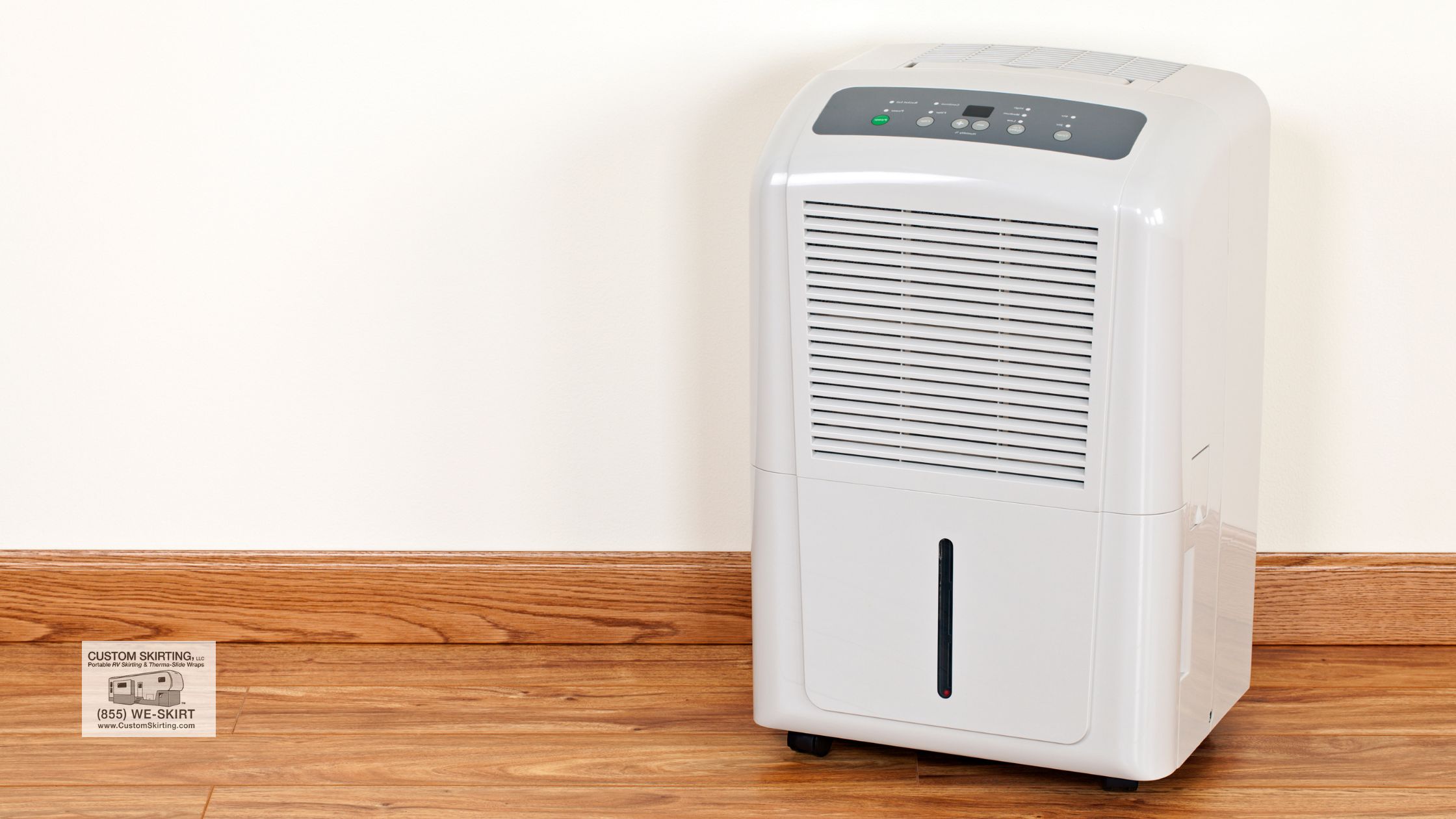
An electric dehumidifier for camper use provides consistent, powerful moisture removal but requires a reliable power source, making it ideal for RVers with hookups or robust solar/generator setups.
Non-Electric Moisture Absorbers
For situations where power is limited or unavailable, non-electric options offer a simple solution:
Dry Pellet Systems (DampRid, Dri-Z-Air)
- Use calcium chloride crystals to absorb moisture from the air
- Require no electricity
- Inexpensive initial purchase
- Limited capacity (typically absorb 1-2 pints before needing replacement)
- Create a toxic brine solution that requires careful disposal
- Need frequent monitoring and replacement
- Best for storage situations or small, enclosed spaces
Silica Gel Dehumidifiers
- Use renewable silica gel beads that change color when saturated
- Can be “recharged” by heating (some models plug in for this purpose)
- Very quiet and portable
- Limited capacity compared to electric models
- Work well in small enclosed spaces like closets and cabinets
Non-electric options work best as supplements to electric dehumidifiers or for RV storage periods when electricity isn’t available.
Key Factors to Consider When Choosing an RV Dehumidifier
Maintaining the right humidity level in your RV is crucial for a comfortable and healthy living environment. Using the right dehumidifier tailored for the camper, you can ensure a worry-free and enjoyable journey in your mobile home. Dehumidifiers play a vital role in maintaining a comfortable and healthy environment within an RV. In an RV setting, where space is limited and varying environmental conditions prevail, understanding how dehumidifiers work becomes essential.
Moisture Removal Capacity
The dehumidifier’s capacity—how much moisture it can remove daily—should match your RV’s size and typical humidity levels. Capacity is measured in pints (or milliliters) of water removed per day:
- Small RVs (under 20 feet): 10-20 pints per day
- Medium RVs (20-30 feet): 20-35 pints per day
- Large RVs (over 30 feet): 35-50+ pints per day
For particularly humid environments or if you frequently shower or cook inside your RV, choose a capacity at the higher end of these ranges. When selecting a dehumidifier for camper use, keep in mind that manufacturer ratings are often based on ideal conditions—actual performance may vary.
Size, Weight, and Portability
In the limited space of an RV, physical dimensions matter significantly:
- Footprint: Measure your available space before purchasing. Remember to account for clearance around the unit for proper airflow.
- Weight: Heavier units may affect your RV’s weight distribution and fuel efficiency.
- Portability: Consider whether you’ll need to move the dehumidifier between rooms or store it while traveling.
- Storage: When not in use, where will you keep the dehumidifier? Some models have collapsible features or compact designs for easier storage.
Look for models specifically designed for small spaces, as these often include space-saving features like wall-mounting options or vertical designs.
Noise Level
Noise sensitivity is amplified in the confined space of an RV, making this a crucial consideration:
- Decibel ratings: Look for models that specify their noise levels. For reference:
- 30-40 dB: Whisper-quiet (comparable to a library)
- 40-50 dB: Moderate (normal conversation)
- 50+ dB: Loud (potentially disruptive during sleep)
- Operation modes: Some dehumidifiers offer “sleep” or “quiet” modes that reduce noise at night.
- Placement options: Consider whether you can place the unit away from sleeping areas.
Desiccant dehumidifiers typically operate more quietly than compressor models, making them preferable for nighttime use in smaller RVs.
Energy Efficiency
Power consumption is a major concern, especially for boondockers or those with limited electrical capacity:
- Wattage: Most RV-suitable dehumidifiers use between 200-700 watts. Lower wattage means less power consumption but potentially reduced capacity.
- Energy Star certification: Look for this designation, which indicates superior efficiency.
- Smart features: Auto-shutoff, programmable humidity levels, and timer functions can reduce unnecessary operation.
- Power source compatibility: Ensure the unit works with your available power (some require pure sine wave power that may not be available with all inverters).
Calculate whether your power system can handle the dehumidifier’s requirements, especially if you’ll be running it alongside other appliances like air conditioners.
Tank Capacity and Drainage Options
How the dehumidifier collects and disposes of water affects how often you’ll need to maintain it:
- Tank size: Larger tanks mean less frequent emptying but take up more space.
- Auto-shutoff: Essential to prevent overflow when the tank fills.
- Continuous drainage options: Many models offer the ability to attach a hose for constant drainage, eliminating the need to empty tanks manually.
- Pump features: Some advanced models include pumps that can move water upward to drains, giving you more placement flexibility.
For full-time RVers, continuous drainage options are highly recommended to reduce maintenance needs.
Top Dehumidifiers for RVs
Best Compact Dehumidifier: SEAVON 27 OZ Quiet Mini Dehumidifier
Price: Approximately $59.98
Capacity: 800ml (27 oz) tank, extracts up to 350ml (12 oz) per day
Coverage Area: Up to 2200 cubic feet (215 sq ft)
The SEAVON Mini Dehumidifier earns top marks as a dehumidifier for camper use due to its compact size and whisper-quiet operation. At just 8.8 inches tall and 6 inches wide, it fits easily on countertops or in small storage areas. The unit operates at less than 35dB—quieter than a library—making it ideal for nighttime use in sleeping areas.
Pros:
- Ultra-compact design perfect for limited RV space
- Nearly silent operation
- Auto-shutoff with LED indicator when tank is full
- Low power consumption (23W)
- Lightweight (2.4 pounds) and portable
Cons:
- Limited daily extraction capacity
- Manual tank emptying required
- Not suitable for larger RVs or very humid environments
- Less effective in temperatures below 59°F
This dehumidifier works best in small to medium RVs in moderate humidity conditions. It’s particularly well-suited for bedrooms and bathrooms where noise concerns are paramount.
Best Budget Option: ProBreeze® 1200 Cubic Feet Electric Mini Dehumidifier
Price: $44.99
Capacity: 500ml tank, removes up to 16oz (473ml) per day
Coverage Area: Up to 205 sq ft
The ProBreeze offers impressive performance at an entry-level price point. This thermoelectric dehumidifier provides efficient moisture removal without the noise of compressor models, making it an excellent choice for budget-conscious RVers.
Pros:
- Affordable price point
- Ultra-quiet operation
- Energy-efficient (consumes only 20W of power)
- Compact and lightweight (2.2 pounds)
- Auto-shutoff with LED indicator
Cons:
- Smaller tank requires more frequent emptying
- No continuous drainage option
- Limited coverage area
- Less effective in colder temperatures
This model is ideal for weekend campers or those who need dehumidification in specific small areas of their RV, such as closets or bathrooms. Its low power draw makes it suitable for solar-powered setups.
Best for Allergen Relief: Tenergy Sorbi 1000ml Air Dehumidifier and Air Purifier
Price: $89.99-$99.99
Capacity: 1000ml (33.8 oz) tank
Coverage Area: Up to 200 sq ft
The Tenergy Sorbi stands out by combining dehumidification with air purification through its built-in HEPA filter system. This dual functionality makes it particularly valuable for RVers with allergies or respiratory concerns.
Pros:
- 2-in-1 functionality (dehumidifier and air purifier)
- HEPA filtration captures 99.97% of particles as small as 0.3 microns
- Larger water tank reduces emptying frequency
- Two fan speeds for customized operation
- Relatively quiet (35-42dB depending on setting)
Cons:
- Higher power consumption (45W) than some competitors
- Slightly larger footprint
- Higher price point
- Filter requires periodic replacement (additional cost)
This model is perfect for RVers who struggle with both humidity and air quality issues, particularly those traveling in areas with high pollen counts or poor air quality. The combination of functions saves valuable space compared to having separate devices.
Best for Allergen Relief: Tenergy Sorbi 1000ml Air Dehumidifier and Air Purifier
Price: $89.99-$99.99
Capacity: 1000ml (33.8 oz) tank
Coverage Area: Up to 200 sq ft
The Tenergy Sorbi stands out by combining dehumidification with air purification through its built-in HEPA filter system. This dual functionality makes it particularly valuable for RVers with allergies or respiratory concerns.
Pros:
- 2-in-1 functionality (dehumidifier and air purifier)
- HEPA filtration captures 99.97% of particles as small as 0.3 microns
- Larger water tank reduces emptying frequency
- Two fan speeds for customized operation
- Relatively quiet (35-42dB depending on setting)
Cons:
- Higher power consumption (45W) than some competitors
- Slightly larger footprint
- Higher price point
- Filter requires periodic replacement (additional cost)
This model is perfect for RVers who struggle with both humidity and air quality issues, particularly those traveling in areas with high pollen counts or poor air quality. The combination of functions saves valuable space compared to having separate devices.
Best for Larger RVs: Crane 1.5 Pint Compact Dehumidifier
Price: $99.99
Capacity: Removes up to 600ml (20 oz) per day, 2-liter (67 oz) tank
Coverage Area: Up to 300 sq ft
The Crane dehumidifier offers substantial capacity in a relatively compact package, making it ideal for larger RVs or motorhomes where moisture control needs are greater.
Pros:
- Higher daily extraction rate than most compact models
- Large water tank reduces emptying frequency
- Auto-shutoff with audible alert when full
- Energy-efficient operation
- Sleek design with carrying handle
Cons:
- Larger and heavier than mini models
- Higher price point
- No continuous drainage option
- Slightly louder operation (around 45dB)
This dehumidifier works well in fifth wheels, Class A motorhomes, or any RV where a single smaller unit might be insufficient. Its higher capacity makes it suitable for controlling humidity throughout a larger space rather than just in a single area.
Best Non-Electric Option: Camco Moisture Absorber
Price: $14.99-$19.99 per unit
Capacity: Absorbs up to 3x its weight in water
Coverage Area: Approximately 50-100 sq ft per unit
The Camco Moisture Absorber uses calcium chloride crystals to pull moisture from the air without requiring any power source, making it ideal for storage situations or boondocking.
Pros:
- No electricity required
- Inexpensive initial purchase
- Completely silent operation
- Effective in enclosed spaces
- Indicates when full with visible crystal changes
Cons:
- Limited capacity requires frequent replacement
- Creates toxic waste solution that needs careful disposal
- Less effective in open areas or very high humidity
- Ongoing cost of replacement crystals
This option works best for RV storage periods or as a supplement to electric dehumidifiers in problem areas like closets or cabinets. Many RVers place several units throughout their stored RV to prevent mold and mildew during off-seasons.
Benefits of RV Dehumidifiers
Preventing Mold and Mildew: Sustaining a balanced humidity level effectively prevents the onset of mold or mildew issues. Mold and mildew spores flourish in warm, humid conditions above 60%, making the maintenance of optimal humidity crucial in averting their growth.
Managing Allergies: Elevated humidity levels exacerbate common household allergy triggers like dust mites, mold spores, and airborne bacteria. These allergens thrive and multiply swiftly in humid environments, potentially worsening allergy symptoms.
Pest Management: Similar to common allergens, pests such as cockroaches, spiders, silverfish, and centipedes favor moist surroundings. Controlling humidity helps deter these pests from thriving in your living spaces.
Complementing Air Conditioning: Employing a dehumidifier for a camper as a supplement to your central air conditioner aids in keeping the air dry. This alleviates the strain on your AC unit, preventing it from overworking to cool down excessively humid areas.
Preserving Structural Integrity: Excessive moisture, particularly in areas like crawl spaces or basements, poses a threat to the integrity of your home’s structure. It can result in damage to support beams, floorboard buckling, and harm to hardwood floors due to rotting caused by prolonged exposure to moisture. While many people think of using a dehumidifier for camper living, the same principle applies to your home—controlling humidity is essential to prevent costly structural damage.
Maintenance & Care Tips for RV Dehumidifiers
- Regularly clean the water tank and air filters:
- Air Filters: Clean or replace the air filters according to the manufacturer’s recommendations. Clogged filters can hinder airflow, reducing the dehumidifier’s efficiency.
- Water Tank: Clean the water tank regularly to prevent mold or bacterial growth. Use mild soap and water to cleanse the tank thoroughly. Ensure it’s completely dry before reinstallation.
- Check and replace filters as recommended by the manufacturer.
- Ensure proper ventilation around the dehumidifier. Adequate airflow improves its efficiency in extracting moisture from the air.
- Place the dehumidifier on a level surface to prevent leaks. Uneven surfaces can cause water to accumulate improperly inside the unit.
- If storing the dehumidifier for an extended period, ensure it’s clean, dry, and stored in a cool, dry place. Follow the manufacturer’s guidelines for proper storage.
- Always refer to the user manual or manufacturer’s instructions for specific maintenance guidelines and recommendations. Different models may have varying requirements.
By following these maintenance and care tips, you can prolong the lifespan of the dehumidifier for the camper and ensure it operates efficiently, maintaining a comfortable and healthy environment inside your RV.
Additional Humidity Control Methods for RVs
Ventilation Strategies
Proper ventilation works hand-in-hand with dehumidifiers to control moisture:
- Roof vents: Use powered roof vents during and after showering to expel humid air directly outside.
- Cross ventilation: When weather permits, open windows on opposite sides of your RV to create airflow that carries moisture away.
- Bathroom fans: Run these during showers and for 15-20 minutes afterward to remove steam.
- Range hoods: Use exhaust fans while cooking, especially when boiling water.
- Air conditioning: Modern AC units not only cool but also dehumidify. Running your AC for even short periods can significantly reduce humidity.
For maximum effectiveness, combine active ventilation with dehumidification, especially in high-moisture areas like bathrooms and kitchens. You can learn more about managing airflow in your RV in our guide on living in an RV during the winter.
Monitoring Humidity Levels
You can’t manage what you don’t measure. Hygrometers are essential tools for RV humidity control:
- Digital hygrometers: Provide accurate readings of current humidity levels. Many include memory functions to track minimum and maximum levels.
- Combination units: Some devices combine thermometers and hygrometers to monitor both temperature and humidity.
- Smart sensors: Advanced options connect to smartphones and can alert you when humidity exceeds acceptable levels.
- Placement: Position hygrometers in different areas of your RV to identify problem zones.
Aim to maintain humidity between 30-50%. Readings consistently above 60% indicate the need for more aggressive dehumidification, while levels below 30% might be too dry for comfort and could cause issues with static electricity and dry skin.
Protect Your RV From the Ground Up
While finding the best dehumidifier for RV use addresses interior moisture, don’t overlook the importance of external protection. If you’re also searching for a dehumidifier for camper setups, it’s essential to pair it with effective exterior solutions. At Custom Skirting, we understand that comprehensive moisture control starts from the ground up. Our custom-tailored RV skirting solutions create a critical barrier against ground moisture and cold air—complementing your interior dehumidification efforts for a complete moisture management system.
Our exclusive “No-Snap, No-Gap” channel system provides superior protection against water, snow, and wind compared to other products on the market. Each skirting solution is blueprinted and custom-tailored on-site for a perfect fit that enhances both protection and appearance. With over a decade of testing in the harshest northern climates, our skirting has proven itself as the top choice for serious RV enthusiasts.
Take your moisture control strategy to the next level—contact Custom Skirting today and experience the difference proper skirting makes in maintaining a dry, comfortable RV environment year-round!