Types of RV Awnings & How to Choose The Right One
Table of contents
When it comes to enhancing your RV camping experience, few accessories make as significant an impact as the right awning. RV awnings effectively double your usable space by creating a shaded outdoor living area, protecting you from the elements while allowing you to enjoy the outdoors. With numerous RV awning types available on the market today, from manual to electric options and various materials to choose from, finding the best RV awnings for your specific needs can be overwhelming. This comprehensive guide will help you navigate through the different types of RV awnings, understand their features and benefits, and ultimately select the perfect awning for RV that will transform your camping adventures for years to come.
Understanding RV Awning Basics
RV awnings serve multiple essential functions that significantly enhance the camping experience. At their core, these extensions provide much-needed shade from harsh sunlight, protection from rain, and create a comfortable outdoor living space that effectively expands your RV’s usable area. Beyond comfort, a quality awning can also reduce cooling costs by blocking direct sunlight from hitting your RV’s exterior, helping maintain a more comfortable interior temperature.
Over the years, RV awning technology has evolved dramatically. What began as simple manual canvas extensions has transformed into sophisticated systems with automatic features, weather sensors, and remote operation capabilities. Modern RV awnings incorporate advanced materials that resist fading, mildew, and water damage while providing excellent UV protection.
The basic components of an RV awning system typically include the fabric canopy, support arms, mounting hardware, and operation mechanism. These components work together to create a reliable shelter that can be deployed when needed and safely stowed away during travel or severe weather conditions.
Benefits of RV Awnings
- Enhanced Outdoor Living: RV awnings extend your outdoor living space, providing a comfortable area to relax, dine, or entertain outside your RV.
- Protection from Sun and Rain: They offer shade from the sun’s harsh rays and shelter from rain, allowing you to enjoy the outdoors regardless of the weather.
- Temperature Control: Awnings can help keep your RV cooler by reducing heat absorption through windows and doors.
- Privacy: They provide a degree of privacy, especially when parked in crowded campgrounds or RV parks.
- Extended Lifespan: Awnings protect your RV’s exterior by minimizing exposure to the elements, potentially extending the lifespan of your RV’s siding and components.
- Easy Setup and Use: Most RV awnings are designed for quick deployment and retraction, making them convenient to use during your travels.
- Aesthetic Appeal: Awnings enhance the look of your RV, adding style and functionality to its exterior.
Types of RV Awnings
Manual Awnings
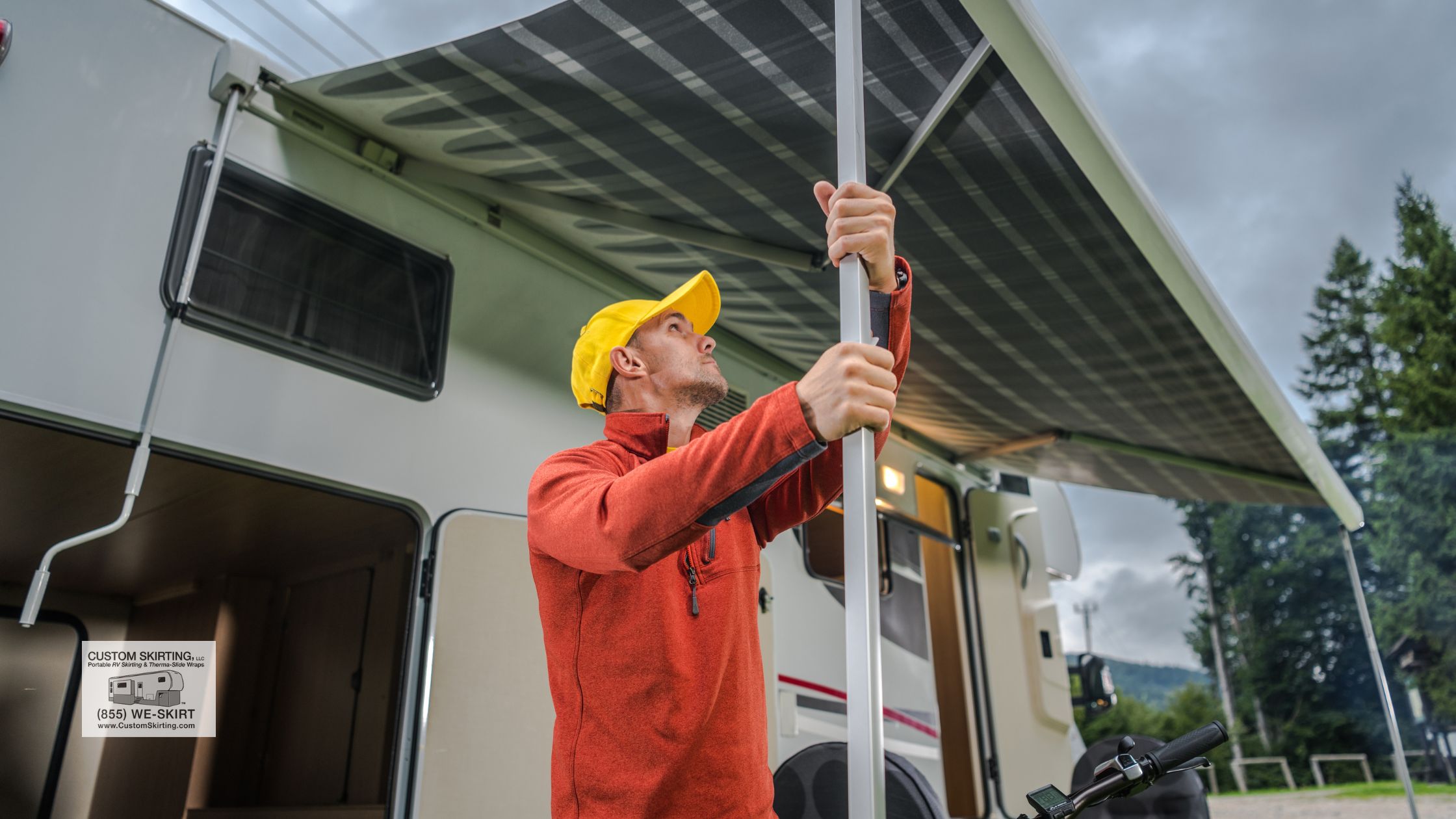
Manual awnings represent the traditional approach to RV shade solutions. These systems require physical effort to extend and retract, typically using a hand crank or pull rod to operate. The operation process generally involves unlocking the travel locks, extending the awning using the rod or crank, and securing it in place with support arms.
The advantages of manual RV awning types include their lower initial cost, simpler maintenance requirements, and fewer potential mechanical failures. Without motors or electronic components, there are simply fewer things that can malfunction. Many RV owners appreciate the reliability and straightforward nature of these systems.
However, manual awnings do have some disadvantages. The physical effort required to extend and retract them can be challenging for some users, particularly with larger awnings. Additionally, you must be physically present to retract the awning during sudden weather changes, which can be problematic if you’re away from your campsite when a storm approaches.
Manual awnings typically range from $500-$1,200 depending on size and quality. Popular brands offering quality manual options include Carefree of Colorado and Dometic, both known for their durability and reliable performance.
Electric/Automatic Awnings
Electric or automatic awnings represent a significant upgrade in convenience, operating with the simple push of a button rather than manual effort. These systems use a motorized mechanism powered by your RV’s 12-volt electrical system to extend and retract the awning smoothly and effortlessly.
The benefits of electric RV awnings are substantial. They offer unmatched convenience, allowing anyone regardless of physical strength to operate them. They can be deployed or retracted quickly, which is particularly valuable when unexpected weather changes occur. Many models allow operation from inside the RV, eliminating the need to go outside during inclement weather.
Premium electric awning models often include advanced features such as wind sensors that automatically retract the awning when detecting dangerous wind speeds, sun sensors that extend the awning when bright sunlight hits the RV, and even integration with weather forecast data to anticipate and respond to changing conditions. Remote controls and smartphone app compatibility further enhance the user experience, allowing operation from anywhere within range.
The primary drawbacks of electric awnings include their higher cost (typically $1,200-$3,000), dependency on electrical power, and more complex repairs when issues arise. The additional mechanical and electronic components create more potential points of failure compared to simpler manual systems.
Smart Awnings
Smart awnings represent the cutting edge of RV awning technology, incorporating intelligent features that go beyond basic motorized operation. These sophisticated systems connect to weather apps, automatically adjust to changing environmental conditions, and can be controlled remotely through dedicated smartphone applications.
The advanced features of smart awnings include programmable settings that allow you to customize operation based on time of day, weather conditions, or personal preferences. Many systems integrate with other RV systems for comprehensive control of your camping environment. Some models even include voice control compatibility with popular smart home assistants.
Smart awnings typically command a premium price point ($2,500-$5,000) and appeal primarily to tech-savvy RV owners who value convenience and cutting-edge features. While the technology continues to improve in reliability, the complexity of these systems can sometimes lead to troubleshooting challenges that require specialized technical support.
Types of RV Awnings by Function
Patio Awnings
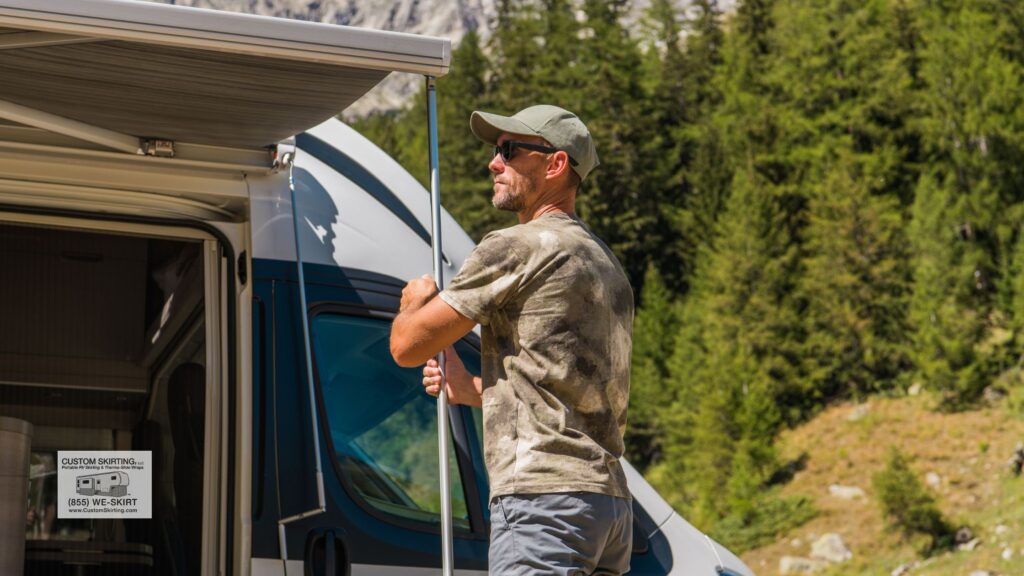
Patio awnings are the most common and versatile type of RV awnings, extending from the side of the RV to create a covered outdoor living space. These awnings typically range from 8 to 21 feet in length and extend outward 8 to 10 feet, effectively creating an outdoor room adjacent to your RV.
These awnings transform the camping experience by providing a sheltered area for outdoor dining, relaxation, and socializing. They’re typically mounted along the roof line of the RV and can be deployed whenever you’re parked and wish to expand your living space.
A wide range of accessories can enhance patio awnings, including:
- Privacy panels that create walls for additional protection and seclusion
- Mosquito nets that keep insects at bay while maintaining airflow
- LED lighting systems that illuminate your outdoor space after dark
- Tie-down kits for additional stability in windy conditions
Patio awnings can be customized with different fabric colors and patterns to complement your RV’s exterior, allowing for personal expression while maintaining functionality.
Window Awnings
Window awnings are smaller units specifically designed to shade individual RV windows. Typically extending 2-3 feet from the RV’s side, these compact awnings serve several important functions that enhance comfort and protect your investment.
The benefits of window awnings include reducing interior heat by blocking direct sunlight, allowing windows to remain open during light rain without water entering, and providing additional privacy while maintaining outward visibility. When coordinated with your main patio awning, window awnings create a cohesive, attractive exterior appearance.
Window awnings come in both fixed and retractable options. Fixed versions remain permanently extended, while retractable models can be closed when traveling or during severe weather. Common installation locations include bedroom windows, kitchen windows, and any other areas where sun control and privacy are desired.
Slide-Out Awnings
Slide-out awnings are specialized covers designed specifically to protect the top of RV slide-out sections. These awnings extend and retract with the slide-out, providing continuous protection to this vulnerable area of your RV.
The primary purpose of slide-out awnings is to prevent debris, water, and sun damage from affecting the slide-out seals and mechanisms. By keeping these components clean and protected, slide-out awnings significantly extend the life of these expensive RV features and help maintain your RV’s value.
Most modern slide-out awnings automatically deploy when the slide-out is extended, requiring no additional steps from the owner. They’re typically made from durable, weather-resistant materials designed to withstand the elements while providing reliable protection. You can learn more about slide-out maintenance and protection in our guide to types of RV slide out seals.
Fixed Awnings
Fixed awnings are permanent installations that cannot be retracted, offering robust protection for RVs that remain in one location for extended periods. These structures typically feature heavier-duty materials and construction than retractable options, allowing them to withstand more severe weather conditions.
The advantages of fixed RV awning types include superior durability in various weather conditions and typically larger coverage areas than retractable models. They’re ideal for seasonal campers or those with semi-permanent setups who prioritize strength and stability over portability.
However, fixed awnings do have significant limitations. Their inability to retract during severe weather can make them vulnerable to damage from high winds or heavy snow loads. Additionally, they present storage challenges when traveling, as they cannot be folded away like retractable models.
Common materials used for fixed awnings include heavy-duty aluminum, steel frames with fabric covers, or even wood construction for more permanent installations. Installation typically requires more substantial mounting hardware and may necessitate professional assistance to ensure proper structural support.
Types of RV Awnings by Material
Vinyl Awnings
Vinyl awnings represent one of the most popular material choices for RV awnings due to their excellent waterproofing capabilities and durability. These awnings are constructed from PVC-coated polyester fabric, typically ranging from 13-16 oz in weight, with multiple plies increasing durability for premium options.
The benefits of vinyl awnings include complete waterproofing that provides reliable protection even during heavy rainfall, excellent UV resistance that prevents sun damage and fading, and straightforward cleaning that typically requires just soap and water. Their waterproof nature makes them particularly suitable for regions with frequent precipitation.
However, vinyl awnings do have some drawbacks. They tend to be heavier than other materials, which can affect operation and put additional stress on mounting hardware. They’re also more prone to developing mildew in humid conditions if not properly dried before storage. Additionally, vinyl offers less breathability than some alternative materials, which can trap heat underneath the awning.
With proper care, vinyl awnings typically last 5-10 years before requiring replacement. Regular cleaning and avoiding prolonged exposure to extreme weather conditions will help maximize their lifespan.
Acrylic Awnings
Acrylic awnings offer a premium alternative to vinyl, featuring breathable, lightweight fabric that provides excellent fade resistance and superior aesthetics. These awnings are typically made from solution-dyed acrylic, a process that integrates color throughout the fiber rather than just on the surface.
The breathable nature of acrylic fabric allows air to pass through while still providing effective shade and moderate water resistance. While not completely waterproof like vinyl, quality acrylic awnings will repel light to moderate rainfall while allowing any moisture that does penetrate to evaporate quickly, reducing the risk of mildew.
Acrylic awnings excel in humid conditions due to their resistance to mildew and typically offer more attractive color options and patterns than vinyl alternatives. The solution-dyed manufacturing process results in colors that resist fading even after years of sun exposure.
These premium benefits come with a higher price point, typically 20-40% more expensive than comparable vinyl options. Acrylic awnings also require specific care requirements, including gentle cleaning with appropriate products to maintain their water-resistant properties. Popular brands like Sunbrella offer warranties of up to 10 years on their premium acrylic fabrics, reflecting their durability and quality.
Aluminum Awnings
Aluminum awnings represent the most durable option in the RV awning market, offering exceptional longevity and weather resistance. These awnings are constructed using metal panels, often with baked-on enamel finishes that resist corrosion and fading.
The benefits of aluminum awnings include outstanding durability that can withstand decades of use with minimal maintenance, superior protection from even the most severe weather conditions, and excellent security features when equipped with locking mechanisms. Their rigid construction provides reliable shade and protection in all conditions.
However, aluminum awnings do have significant limitations. Most designs cannot be retracted, making them suitable primarily for stationary RVs rather than those frequently traveling. They can generate considerable noise during rainfall, which some users find disruptive. Additionally, they lack the soft, residential appearance of fabric awnings, presenting a more utilitarian aesthetic.
Installation of aluminum awnings typically requires professional assistance due to their weight and the need for secure mounting. They’re most suitable for larger RVs with adequate structural support to accommodate the additional weight of metal construction.
How to Choose the Right RV Awning
Selecting the ideal awning for your RV requires careful consideration of several key factors to ensure you get the perfect match for your specific needs and circumstances.
Start by considering your RV type and size, as this will determine compatible mounting options and appropriate awning dimensions. Different RV classes and models have varying roof heights, wall construction, and available mounting points that will influence your options. For more information on different RV types, check out our guide on types of RVs and key differences.
Your typical camping locations and weather conditions should heavily influence your decision. If you frequently camp in windy areas, prioritize models with robust stability features and automatic retraction capabilities. For predominantly sunny regions, focus on UV protection and heat reduction. Rainy climates call for waterproof materials and adequate slope for water runoff.
Consider your frequency of use and how you’ll typically deploy your awning. If you’re a weekend camper who sets up and breaks down frequently, ease of operation becomes crucial. Full-time RVers might prioritize durability and weather resistance for extended deployment periods.
Budget constraints naturally play a role, but consider long-term value rather than just initial price. A higher-quality awning might cost more upfront but save money over time through greater durability and fewer repairs. Most quality RV awnings range from $800 to $3,000 depending on size, features, and materials.
To ensure proper fit, carefully measure the available space on your RV. For length, measure the flat area where the awning will mount, accounting for windows, doors, and other obstacles. For projection (how far the awning extends), consider your typical campsite size and desired coverage area. Most RV awnings project 8-10 feet from the side of the vehicle.
Best RV Awning Brands
1. Dometic
- Features: Dometic offers a range of innovative awnings, including power awnings with remote controls, LED lighting, and weather sensors. Their products are known for durability and ease of use.
- Popularity: Dometic is a highly popular choice among RVers for its reliable awnings and comprehensive warranty coverage.
2. Carefree of Colorado
- Features: Carefree of Colorado awnings are known for their lightweight design, ease of installation, and variety of options. They offer manual and motorized awnings with customizable features.
- Popularity: Carefree of Colorado is favored for its affordable yet high-quality awnings suitable for various camper sizes and styles.
3. Solera
- Features: Solera awnings are renowned for their versatility, offering slide-out and window awnings in addition to patio awnings. They incorporate innovative features like adjustable pitch and durable fabric.
- Popularity: Solera is popular for its comprehensive range of awning products and accessories designed to enhance outdoor living spaces.
4. Lippert Components
- Features: Lippert Components manufactures a range of awnings, including patio and slide-out awnings. They emphasize durability and weather resistance in their designs.
- Popularity: Lippert Components is a trusted name in the RV industry, known for its dependable awning solutions and aftermarket support.
5. SunWave
- Features: SunWave offers budget-friendly awnings suitable for smaller RVs and campers. Their products are straightforward, easy to install, and provide basic sun protection.
- Popularity: SunWave awnings are popular among budget-conscious RVers seeking simple and affordable shade solutions.
Conclusion
Selecting the right RV awning type can significantly enhance your camping experience by providing a comfortable outdoor living space in various weather conditions. Throughout this guide, we’ve explored the diverse range of options available, from operation mechanisms and functions to materials and accessories.
The perfect awning for your RV depends on your individual needs and circumstances. Consider your typical usage patterns—whether you’re a weekend warrior or full-time RVer will influence which features matter most. Your common camping locations and the weather conditions you typically encounter should heavily inform your decision, as should your budget and preferences regarding convenience versus simplicity.
Remember that proper installation and regular maintenance are crucial to maximizing the lifespan and performance of your awning investment. Following manufacturer guidelines for operation, cleaning, and storage will ensure years of reliable service.
As you evaluate your options, focus on long-term value rather than just initial cost. A quality awning that meets your specific needs will enhance your RV lifestyle for years to come, providing shade, protection, and expanded living space wherever your adventures take you.
With the right RV awning, you’ll create countless memories in your comfortable outdoor space, protected from the elements while still enjoying the natural beauty that makes RV travel so rewarding.
Experience the Perfect Complement to Your RV Awning!
While your RV awning creates the perfect outdoor living space, don’t overlook what’s happening underneath your RV. Custom Skirting provides the ideal companion to your awning setup by stabilizing the temperature inside your RV and protecting it from wind—especially important in those breezy camping locations where you’ll be enjoying your awning the most!
Our team at Custom Skirting blueprints and custom-tailors your RV skirting on-site, ensuring a flawless fit with our exclusive “No-Snap, No-Gap” channel system that seals out water, snow, and wind more effectively than any other product available. With over a decade of testing in the harshest winter conditions across North America, our skirting solution has proven itself as the top choice for serious RV enthusiasts.
The best part? Our user-friendly design moves with you, setting up in just an hour by one person, making it the perfect companion for your adventures. Complete your RV’s protection system today with Custom Skirting and experience the difference for yourself!