How to Prevent and Manage Mold in Your RV
Table of contents
- Understanding Mold in RVs: Causes and Risks
- Identifying Mold in Your RV
- Importance of Keeping Mold Out of Your RV
- Essential Prevention Strategies for RV Mold
- Managing Mold On The RV’s Exterior
- Managing Mold On The RV’s Interior
- Products and Tools for Mold Prevention and Removal
- Conclusion
- Protect Your RV from Moisture and Mold with Custom Skirting
- Related Articles
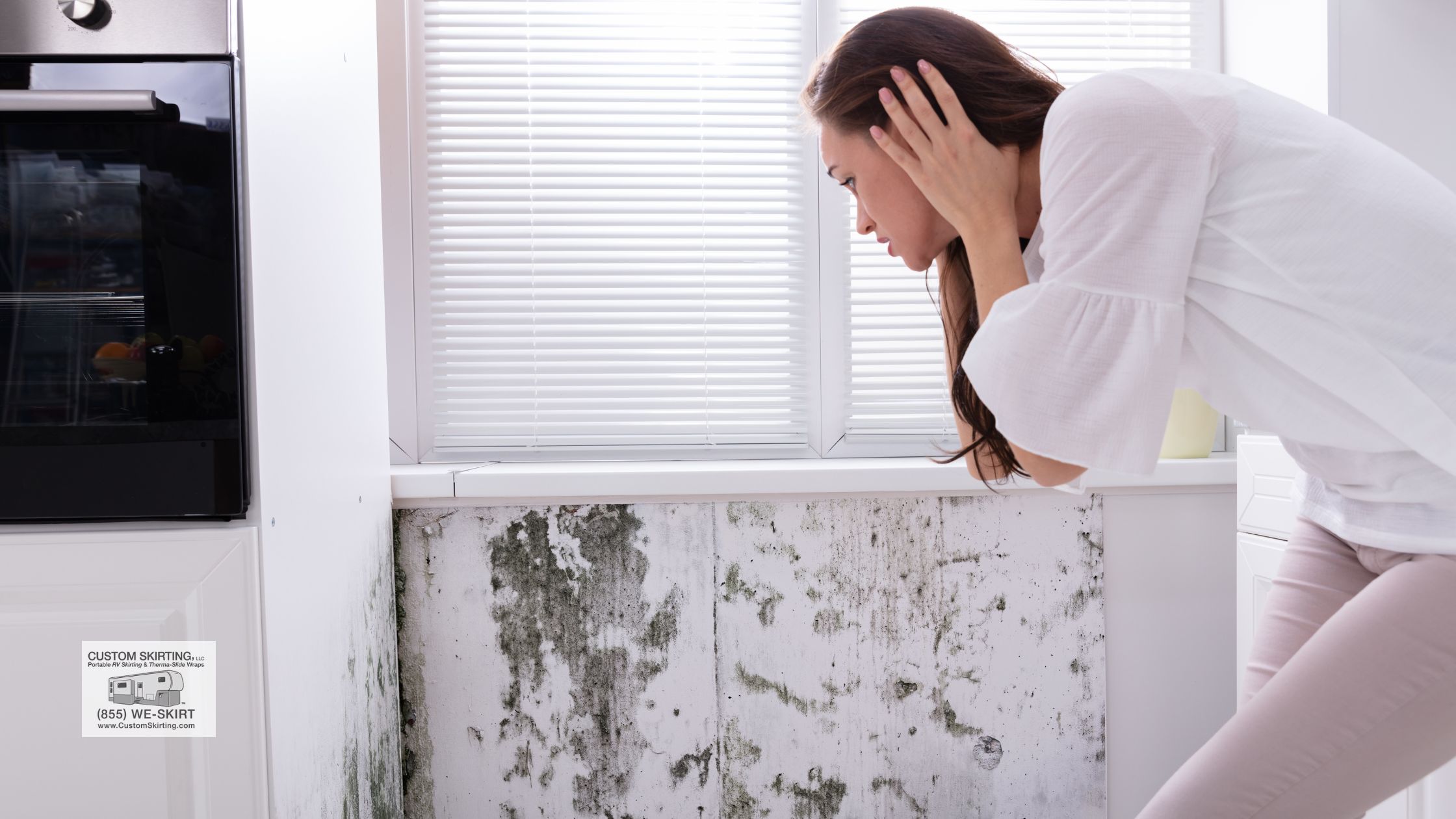
Discovering mold in RV interiors can quickly turn your dream vacation into a nightmare. The enclosed, often humid environment of recreational vehicles creates perfect conditions for mold in camper walls and other surfaces to flourish. This isn’t just an aesthetic issue—mold in a camper can pose serious health risks to occupants and cause significant structural damage to your investment. Many RV owners wonder, “Is mold in a camper dangerous?” The answer is a resounding yes. In this comprehensive guide, we’ll explore everything you need to know about identifying, preventing, and how to get rid of mold in RV environments effectively, helping you protect both your health and your valuable recreational vehicle.
Understanding Mold in RVs: Causes and Risks
Mold thrives in environments that provide three essential elements: moisture, a food source (organic materials), and appropriate temperatures. Unfortunately, RVs often provide all three in abundance, which is why many owners search for solutions on how to get rid of mold in RV.
The Science Behind Mold Growth
Mold spores are constantly present in the air around us. When these microscopic spores land on damp surfaces inside your RV, they begin to grow and multiply. RVs are particularly susceptible to mold growth because they contain numerous organic materials that serve as food sources for mold, including:
- Wood framing and cabinetry
- Fabric upholstery and curtains
- Carpet and padding
- Paper products
- Dust and dirt
The confined space of an RV also means that moisture from cooking, showering, and even breathing can quickly accumulate without proper ventilation.
Common Causes of Moisture in RVs
Several factors contribute to excess moisture in recreational vehicles:
- Condensation: Temperature differences between the inside and outside of your RV cause water vapor to condense on windows, walls, and ceilings.
- Leaks: Water intrusion from roof leaks, window seals, plumbing issues, or slide-out seals.
- Poor ventilation: Inadequate air circulation traps moisture inside.
- Human activities: Cooking, showering, and even breathing release moisture into the air.
- Humid climates: Traveling in or storing your RV in high-humidity regions increases moisture levels.
- Improper storage: Covering an RV with non-breathable materials can trap moisture.
Health Risks Associated with Mold in RV Environments
Is mold in a camper dangerous? Absolutely. Exposure to mold can cause a variety of health problems, particularly in the confined space of an RV where concentration levels can be high:
- Allergic reactions (sneezing, runny nose, red eyes, skin rash)
- Asthma attacks or worsening asthma symptoms
- Irritation of the eyes, skin, nose, throat, and lungs
- Respiratory infections
- More severe reactions in people with compromised immune systems
Long-term exposure to certain types of mold can lead to more serious health conditions, making prompt mold in RV remediation essential.
Damage to Your RV Investment
Beyond health concerns, mold can cause significant damage to your RV:
- Deterioration of upholstery, curtains, and mattresses
- Rotting of wooden structures and cabinetry
- Damage to wall panels and ceiling materials
- Corrosion of electrical components
- Permanent staining of surfaces
- Persistent musty odors that are difficult to eliminate
- Decreased resale value
The cost of repairing dangerous mold in camper environments often far exceeds the cost of prevention, making proactive measures against mold in campers a wise investment for anyone learning how to get rid of mold in an RV.
Identifying Mold in Your RV
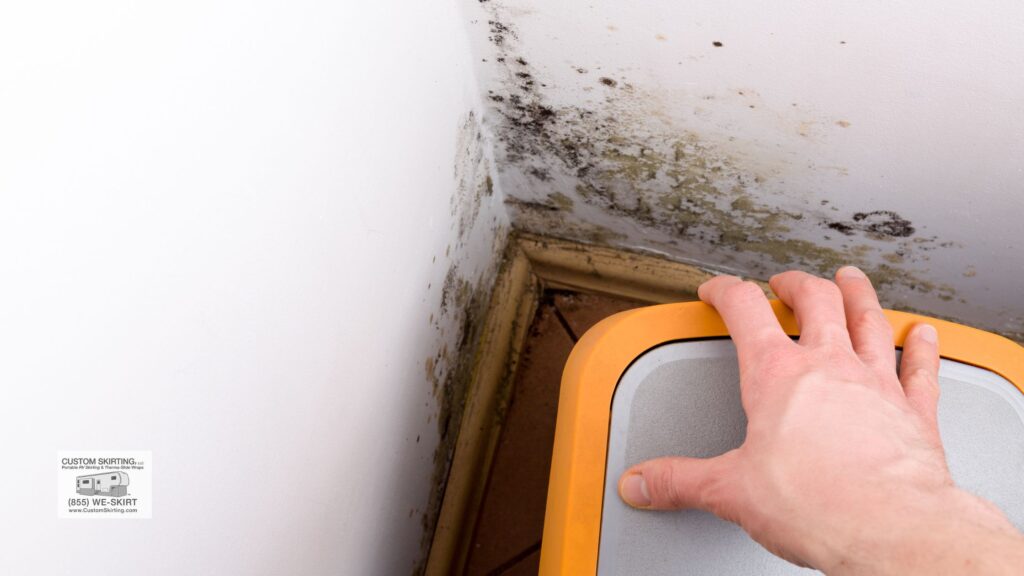
Early detection of mold in RV interiors is crucial for preventing extensive damage and health issues. Here’s how to spot mold before it becomes a major problem:
Visual Signs of Mold
Mold can appear in various colors and textures:
- Black or dark green spots (common with Stachybotrys or “black mold”)
- White, powdery patches
- Green or blue fuzzy growths
- Pink or orange slime (often found in bathrooms)
- Yellow or brown discoloration
Common Hiding Spots for Mold in Camper Environments
Mold often begins growing in areas you don’t regularly inspect:
- Behind furniture and appliances
- Under mattresses and cushions
- Inside cabinets and closets
- Around window frames and door seals
- Behind bathroom fixtures
- Around air conditioning vents
- Under sinks and near plumbing
- In corners where walls meet ceilings
- Inside storage compartments
- Around slide-out mechanisms
Detecting Mold by Smell
One of the earliest indicators of dangerous mold in a camper or RV interiors is a distinctive musty, earthy odor. If your RV smells damp or musty, especially when first opened after storage, you likely have hidden mold growth that requires investigation.
Conducting a Thorough Inspection
To properly check for mold in camper walls and other areas:
- Use a flashlight to examine dark corners and crevices
- Look for water stains or discoloration on walls, ceilings, and floors
- Check for soft spots in walls or floors that might indicate water damage
- Inspect around windows and doors for moisture or discoloration
- Remove access panels to check behind walls where plumbing runs
- Examine the underside of mattresses and cushions
- Open all cabinets and storage areas for inspection
Professional Testing Options
If you suspect mold but can’t visibly confirm it, consider these testing options:
- DIY mold test kits (available at hardware stores)
- Hiring a professional mold inspector with RV experience
- Moisture meters to identify potential problem areas
- Air quality testing to detect airborne mold spores
Remember that visible mold always requires action, regardless of test results. If you can see or smell mold in your RV, remediation is necessary.
Importance of Keeping Mold Out of Your RV
Keeping mold out of your RV is essential for maintaining a safe and healthy living environment, as well as preserving the integrity of your vehicle. Here’s why it’s crucial to prevent mold growth:
- Health Risks: Mold exposure in a camper can be dangerous because it can cause allergic reactions, respiratory issues, and other health problems, especially for those with pre-existing conditions. Prolonged exposure to mold spores can lead to serious health concerns.
- Structural Damage: Mold can weaken and deteriorate materials in your RV, including wood, drywall, and insulation. This can compromise the structural integrity of your vehicle over time.
- Odor and Discomfort: Mold growth can cause unpleasant odors and create a damp, musty atmosphere inside your RV. This can make your living space uncomfortable and less enjoyable.
- Aesthetic Issues: Mold in a camper can leave unsightly stains on surfaces, including walls, ceilings, and upholstery. These stains can be difficult and costly to remove.
- Resale Value: Mold damage can significantly reduce the resale value of your RV. Prospective buyers may be wary of purchasing a vehicle with a history of mold issues.
By taking proactive measures to prevent mold growth and promptly addressing any signs of mold, you can protect your health, preserve your RV’s condition, and ensure a more pleasant RVing experience. Many RV owners ask, is mold in a camper dangerous? The answer is yes—knowing how to get rid of mold in an RV through regular inspections, proper ventilation, and moisture control is key to keeping mold at bay.
Essential Prevention Strategies for RV Mold
Preventing mold in RV environments is far easier and less expensive than removing it. A comprehensive prevention strategy focuses on controlling moisture, regular maintenance, and proper storage practices.
Controlling Moisture and Humidity
Optimal Humidity Levels
The ideal humidity level inside your RV should be between 30-50%. Levels above 60% create conditions ripe for mold growth. Consider investing in a hygrometer (humidity meter) to monitor levels accurately.
Dehumidifiers for RVs
Several types of dehumidifiers work well in RV environments:
- Electric dehumidifiers: Effective but require power, making them ideal for when you’re connected to shore power or running a generator. Look for energy-efficient models designed for small spaces.
- Desiccant dehumidifiers: These work without electricity and are perfect for storage periods or boondocking.
- Mini-dehumidifiers: Compact units designed specifically for RVs and small spaces.
Place dehumidifiers in central locations or areas prone to moisture, such as bathrooms or kitchens. Empty collection tanks regularly or ensure proper drainage.
Moisture Absorbers
Several products can help absorb excess moisture, which is important if you’re wondering, is mold in a camper dangerous?
- DampRid: Calcium chloride crystals that absorb moisture from the air
- Silica gel packets: Effective in enclosed spaces like cabinets and closets
- Activated charcoal: Absorbs both moisture and odors
- Baking soda: A natural moisture absorber that also combats odors
Place these products throughout your RV, focusing on bathrooms, closets, under sinks, and other moisture-prone areas. Replace them according to manufacturer recommendations.
Ventilation Strategies
Proper airflow is crucial for preventing mold in camper walls and environments:
- Use roof vents and fans when cooking, showering, or in humid conditions
- Install vent covers that allow ventilation even during rain
- Open windows when weather permits to create cross-ventilation
- Consider aftermarket vent fans with higher CFM (cubic feet per minute) ratings for better air exchange
- Use bathroom and kitchen exhaust fans during and after use
- Leave space between furniture and exterior walls to allow air circulation
- Consider living in an RV during the winter with proper ventilation strategies
Regular Maintenance to Prevent Mold
Cleaning Practices
Regular cleaning helps prevent mold in RV environments:
- Wipe down shower walls after each use
- Clean the bathroom and kitchen regularly with mold-inhibiting cleaners
- Vacuum and clean upholstery frequently
- Wash and thoroughly dry bedding, curtains, and removable covers
- Use mold-preventing sprays on susceptible surfaces
- Clean air conditioner filters regularly
Seal Maintenance
Preventing water intrusion is critical:
- Inspect and reseal exterior seams and roof seals annually
- Check window seals and replace weatherstripping as needed
- Maintain slide-out seals and mechanisms
- Inspect door seals and replace when showing wear
- Consider a comprehensive RV roof maintenance program
Plumbing System Checks
Water leaks are a primary cause of mold in camper walls:
- Regularly inspect visible plumbing connections
- Check for soft spots around plumbing fixtures
- Properly winterize your RV to prevent frozen and burst pipes
- Monitor water pressure to prevent stress on plumbing components
- Consider installing water leak detectors in critical areas
- Learn how RV plumbing works to better maintain your system
Storage Considerations for Mold Prevention
Pre-Storage Cleaning
Before storing your RV:
- Clean and thoroughly dry all surfaces
- Remove all food items, even non-perishables
- Empty and clean the refrigerator, leaving doors propped open
- Drain all water lines and holding tanks
- Clean the air conditioner and furnace
- Vacuum thoroughly, including under cushions and mattresses
Maintaining Airflow During Storage
Proper air circulation is essential when storing your RV:
- Leave cabinet doors and drawers slightly open
- Prop up mattresses or remove them entirely
- Remove fabric items when possible or ensure they’re completely dry
- Use moisture absorbers throughout the RV
- Consider running a dehumidifier if power is available
- Install solar-powered vent fans for continuous ventilation
Climate Considerations
Storage environment affects mold risk:
- Climate-controlled storage provides the best protection against mold
- If outdoor storage is necessary, choose locations with good drainage
- In humid climates, check your RV regularly during storage
- Consider how to keep moisture out of your RV during winter with proper preparation
RV Covers and Skirting
Proper exterior protection helps prevent mold:
- Use only breathable RV covers that allow moisture to escape
- Ensure covers are properly sized and secured to prevent wind damage
- Consider Custom Skirting for winter storage to regulate temperatures and reduce condensation
- Select from the best RV covers for your specific needs
Managing Mold On The RV’s Exterior
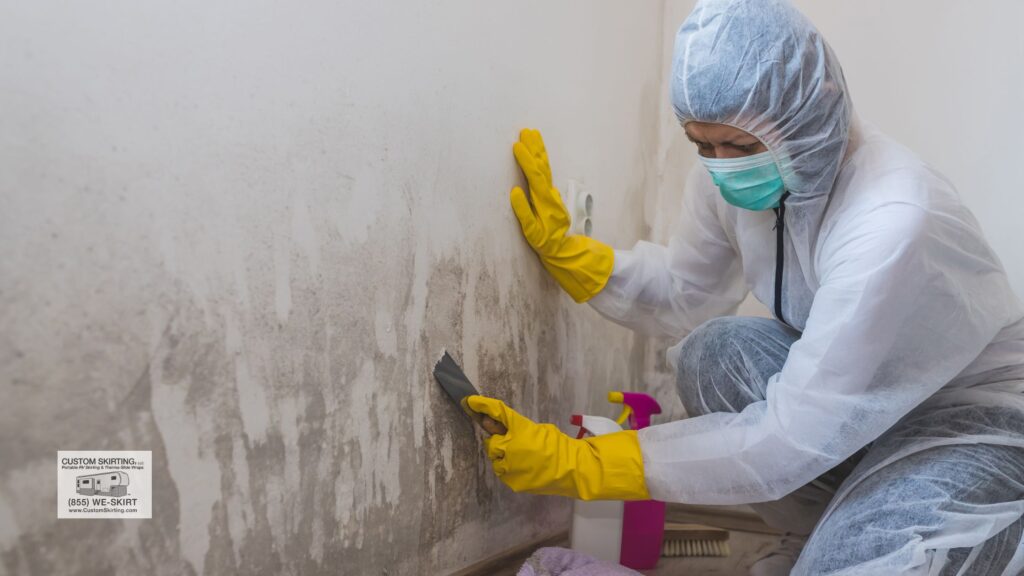
Getting rid of mold on the exterior of your RV is crucial for both aesthetics and maintenance. You might be wondering, is mold in a camper dangerous? While exterior mold is mostly a cosmetic issue, addressing it promptly can prevent potential damage and more serious indoor mold problems. Here’s how you can effectively remove and prevent mold buildup:
- Cleaning: Start by thoroughly cleaning the affected areas using a mild detergent or specialized RV cleaner. Use a soft brush or sponge to scrub the surface gently, paying attention to crevices and joints where mold can accumulate.
- Rinsing: After cleaning, rinse the area with clean water to remove any remaining soap residue and loosened mold particles.
- Disinfecting: Use a mold-killing solution or a mixture of vinegar and water (1:1 ratio) to disinfect the cleaned surfaces. Apply the solution with a spray bottle and let it sit for a few minutes before wiping it off.
- Preventive Measures: To prevent future mold growth on the exterior:
- Keep the RV covered or parked in a shaded area to minimize exposure to moisture and sunlight.
- Regularly inspect and repair roof seals, windows, and seams to prevent water intrusion.
- Apply a protective wax or sealant to exterior surfaces to create a barrier against moisture and contaminants.
Managing Mold On The RV’s Interior
Getting rid of mold from the interior of your RV is essential for maintaining air quality and preventing health issues. Here’s how to effectively manage mold on the interior:
- Identify Moldy Areas: Inspect the interior of your RV for signs of mold, including musty odors, discoloration, or visible growth on surfaces.
- Cleaning: Use a specialized mold cleaner or a mixture of water and detergent to clean moldy surfaces. Scrub gently with a brush or sponge to remove mold and stains. Here are some of the best-specialized mold cleaners on the market:
- Concrobium Mold Control: This product is effective at killing and preventing mold growth without harsh chemicals.
- Star Brite Mold & Mildew Stain Remover: Ideal for removing tough mold and mildew stains from various surfaces inside an RV.
- Bio-Kleen M00607 Molds & Mildew Stain Remover: A non-toxic and biodegradable cleaner that effectively eliminates mold and mildew stains.
- Drying: After cleaning, thoroughly dry the affected areas using fans or dehumidifiers to remove excess moisture.
- Disinfecting: Apply a mold-killing solution, such as hydrogen peroxide or white vinegar, to disinfect the cleaned surfaces and inhibit mold regrowth.
- Preventive Measures: To prevent mold from returning inside your RV:
- Maintain adequate ventilation by opening windows and using exhaust fans.
- Monitor indoor humidity levels and use dehumidifiers if necessary.
- Insulate walls and floors to prevent condensation and moisture buildup.
By following these steps and implementing preventive measures, you can effectively manage mold growth both inside and outside your RV, including common issues like mold in camper walls. Many RV owners wonder, how to get rid of mold in RV and whether mold in a camper is dangerous. Regular inspections and prompt action are essential for addressing mold issues and preventing future problems, ensuring a safe and comfortable living environment.
Products and Tools for Mold Prevention and Removal
Recommended Prevention Products
Invest in these tools to prevent mold in RV environments:
Dehumidifiers
- Portable electric dehumidifiers (30-70 pint capacity)
- Desiccant dehumidifiers for storage periods
- Mini-dehumidifiers for closets and small spaces
Moisture Absorbers
- DampRid containers and hanging bags
- Eva-Dry renewable moisture absorbers
- Silica gel packets for enclosed spaces
- Activated charcoal packets
Monitoring Tools
- Digital hygrometers with high/low memory
- Wireless humidity monitors with alerts
- Moisture meters for checking walls and surfaces
- Leak detectors for early warning
Ventilation Improvements
- Roof vent covers for all-weather ventilation
- High-volume vent fans (Fantastic Fan, MaxxAir)
- Vent cushions to prevent condensation
- Window vent shades for secure ventilation
Effective Cleaning Products and Tools
For removing mold in camper environments:
Natural Cleaners
- White distilled vinegar (5% acidity)
- Hydrogen peroxide (3% solution)
- Borax powder
- Tea tree oil
- Grapefruit seed extract
Commercial Products
- Concrobium Mold Control
- RMR-86 Instant Mold Stain Remover
- Mold Armor mold remover
- Benefect Botanical Decon 30
Cleaning Tools
- HEPA vacuum cleaner
- Microfiber cloths
- Soft and medium-bristle brushes
- Spray bottles for solutions
- Protective equipment (masks, gloves, goggles)
Innovative Technologies
Consider these advanced solutions:
- UV air purifiers to kill airborne mold spores
- Ozone generators for periodic deep cleaning (use with caution)
- Moisture-detecting smart sensors with smartphone alerts
- Mold-resistant paints and sealants for vulnerable areas
- Antimicrobial fabric treatments for upholstery
Conclusion
Dealing with mold in RV environments requires vigilance, regular maintenance, and prompt action when problems arise. By understanding the causes and risks of mold in camper walls and other areas, you can implement effective prevention strategies that protect both your health and your investment. Remember that controlling moisture is the foundation of mold prevention—through proper ventilation, dehumidification, and regular inspections.
When asking “is mold in a camper dangerous?” the answer is clear: yes, it poses significant health risks and can cause extensive damage to your RV. That’s why knowing how to get rid of mold in RV interiors quickly and thoroughly is an essential skill for every RV owner.
By following the comprehensive strategies outlined in this guide, you can enjoy a healthier, cleaner RV experience and preserve your vehicle’s value for years to come. Make mold prevention part of your regular RV maintenance routine, and you’ll avoid the headaches, health concerns, and expenses that come with extensive remediation caused by mold in camper walls.
Protect Your RV from Moisture and Mold with Custom Skirting
Don’t let moisture and mold compromise your RV investment! Custom Skirting offers the Nation’s #1 RV skirting solution that significantly reduces condensation and moisture buildup—one of the primary causes of mold in RVs.
Our team blueprints and custom-tailors your RV skirting on-site, ensuring a flawless fit that provides unparalleled protection. The exclusive “No-Snap, No-Gap” channel system seals out water, snow, and wind more effectively than any other product on the market, creating a crucial barrier against the elements that contribute to mold growth.
With over a decade of testing in the harshest winters across the northern United States and Canada, our skirting has proven itself as the top choice for RV enthusiasts serious about protecting their investment. Plus, its user-friendly design can be set up by just one person in about an hour and is ready to move with you whenever adventure calls.
Take proactive steps against mold today—get Custom Skirting for your RV and experience the difference for yourself!