What Is RV Skirting & Why Is It Important?
Table of contents
Winter camping presents unique challenges for RV owners, and proper insulation is crucial for comfort and protection. RV skirting, camper skirting, trailer skirt solutions, 5th wheel skirting, and travel trailer skirting all serve the same essential purpose: creating a protective barrier between your RV’s undercarriage and the harsh winter elements. This comprehensive guide explores all your options, from professional installations to budget-friendly DIY alternatives, helping you make the best choice for your specific needs, climate conditions, and travel habits.
What is RV Skirting?
RV skirting, also known as camper/travel trailer skirting, trailer skirt, 5th wheel skirting, or underpinning, is a protective barrier installed around the lower perimeter of your RV. This barrier is typically made of various materials such as vinyl, insulated panels, or snap-together systems, and its primary purpose is to enclose the space beneath your RV. This seemingly simple addition plays a crucial role in enhancing your RV’s performance and comfort during colder months, as it contributes to energy efficiency, temperature regulation, protection against the elements, enhanced aesthetics, and pest and rodent prevention.
Benefits of RV Skirting and Why It’s Important
Energy Efficiency
One of the most significant benefits of RV/camper skirting is its contribution to energy efficiency. When you skirt your RV, you create an enclosed space beneath it, effectively sealing off the area. This barrier prevents cold drafts from infiltrating your RV, reducing the strain on your heating system. As a result, your RV remains warmer, and you can enjoy a cozier interior without constantly cranking up the heat. Areas that are especially beneficial are the bone-chilling, thin-walled, and floored slide-out areas. Proper RV/camper skirting will heat these colder areas by providing heat rising to the underside of your floors.
Temperature Regulation
Travel trailer skirting also aids in temperature regulation. In hot weather, it can help keep your RV cooler by blocking the sun’s direct rays, reducing the need for excessive air conditioning. In colder climates, it acts as an insulator, maintaining a more consistent temperature inside your RV. This means that you’ll use less energy and enjoy a more comfortable living space year-round. This regulation of temperatures can also reduce the amount of condensation that builds up with fluctuating temperatures.
Protection Against the Elements
As you travel from place to place, your trailer faces various weather conditions, from rain and snow to wind and dust, which is why you would need protection like skirting. RV/camper skirting serves as a protective shield against these elements. In winter, it guards against frigid temps that can quickly create thousands of dollars in damages to your plumbing system, in turn forcing you to take your home to a repair shop and bunk up in a hotel.
Pest and Rodent Prevention
One often overlooked benefit of RV skirting is its role in pest and rodent prevention. Without proper skirting, small creatures like mice and insects can find their way into the underside of your RV, potentially causing damage and hygiene issues. Skirting acts as a barrier, reducing the risk of unwanted visitors and maintaining a pest-free environment.
Extra Storage Space
RV skirting offers more than just insulation and protection from the elements; it’s a strategic solution for maximizing storage in your RV, particularly advantageous for 5th-wheel owners. By installing RV skirting, you create an enclosed space beneath your RV, perfect for stashing bikes, motorcycles, coolers, chairs, and other bulky items that would otherwise clutter your living quarters or rooftop storage. This additional storage not only enhances organization and convenience but also frees up valuable interior and exterior space, allowing for a more enjoyable and uncluttered travel experience.
Security
RV Skirting is also a savvy security measure for safeguarding your valuables on the road. By enclosing the underside of your RV with skirting, you create a discreet hiding spot for your belongings, keeping them out of sight and away from prying eyes. This added layer of security is especially beneficial for 5th wheel owners, as it provides a concealed space for storing expensive items like bikes, motorcycles, coolers, chairs, and more, reducing the risk of theft or tampering while you’re on the go. With RV skirting, you can enjoy peace of mind knowing that your valuables are safely tucked away, whether you’re parked at a campground, exploring remote destinations, or simply taking a pit stop along your journey.
Maintenance and Care
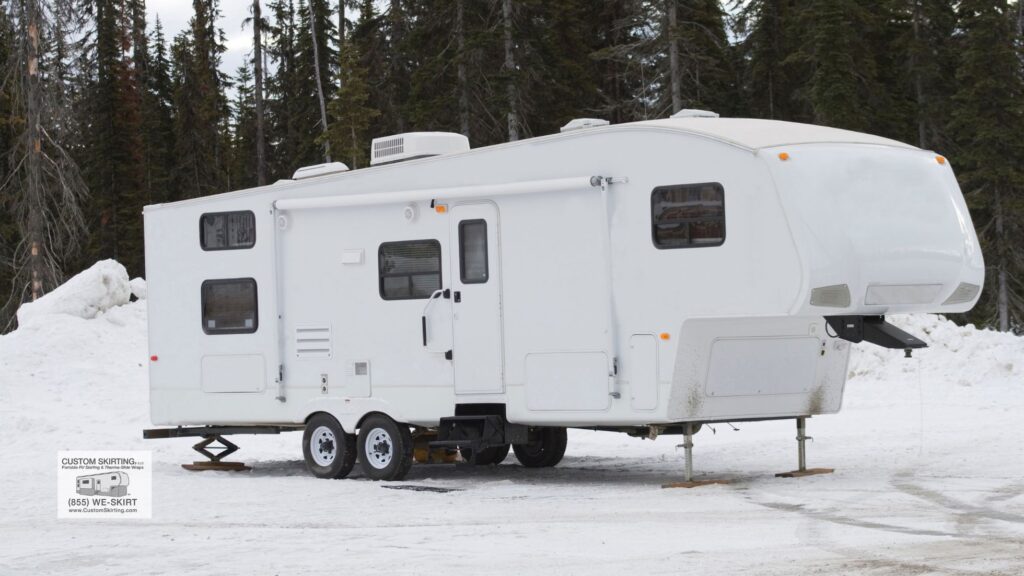
To maximize the benefits of 5th-wheel skirting, it’s essential to understand the importance of regular maintenance. While skirting itself is relatively low-maintenance, it’s vital to conduct regular inspections and cleaning to ensure its continued effectiveness. Here are some key points to consider:
- Inspections: Regularly check the condition of your skirting. Look for any tears, holes, or areas that might have come loose. Address these issues promptly to maintain the barrier’s integrity.
- Cleaning: Clean your skirting as needed. This helps maintain its appearance and ensures that it functions optimally. Use a gentle cleanser to avoid damage to the material, like soapy water. Similar to a tent, if you have portable skirting, never store your skirting with moisture on it. Moisture can quickly turn to mold, rotting your investment. Furthermore, most manufacturers will not cover this in their warranty.
- Repairs: If you notice any significant damage, such as a tear or a broken fastener, repair it immediately. Ignoring such issues can lead to compromised performance.
Different Types of RV Skirting
There are various types of RV or camper skirting available, each with its own set of advantages and disadvantages. Let’s explore some of the most common options:
Vinyl Skirting
Vinyl skirting is one of the most popular choices for camper owners. It’s relatively affordable and offers excellent protection against the elements. Vinyl skirting is easy to install and provides a clean, finished look.
Perhaps the greatest benefit of vinyl skirting is the fact that its portability adds to its nomadic lifestyle that most RV owners need. Even though vinyl skirting can be very heavy-duty, it is still very portable. A professionally designed and crafted vinyl skirting with a good attachment system that seals out the elements can create a great R Value, but still have the benefits of looking great, yet being portable.
Insulated Skirting
For those planning to spend extended periods in extreme weather conditions, insulated skirting is an excellent choice. This type of skirting is designed with thermal properties, providing enhanced insulation for your RV. It helps maintain a comfortable interior temperature even in the harshest winter conditions. While insulated skirting is more expensive, it can significantly reduce heating costs over time. A downfall is that it adds a significant amount of bulk, which may not make it ideal for packing up and re-use.
Additionally, if your 5th wheel/travel trailer skirting is made out of foam board, one should take into consideration how long your RV will be located in that exact same spot. If your RV park allows it and you will not be moving for several years, foam board insulation can be an excellent option. If you do move frequently, not only does foam insulation take up a lot of travel space, like plywood or OSB, but it will not adjust to the ground at your next RV site, requiring you to add or subtract foam to make it seal to the ever-changing topography.
Snap-together skirting
Snap-together skirting is a convenient option for RV owners who want a balance between protection and ease of installation in their camper. It typically consists of panels that connect and snap together at their attachment point, creating a secure barrier around your RV. Snap-together skirting is easy to set up and take down, making it a practical choice for those who frequently move their RV.
Snap-together skirting is a lower budget option for those looking to DIY. This is mind, if you are in colder climates, you will want to factor in durability, ease of use, and how energy efficient the product is.
A huge advantage in snap-together skirting is its initial price point. It is a less expensive option to secure your RV Skirting to your home, and there are even some DIY companies that will sell you kits. With that in mind, there can be some extra hindered costs that may not make that initial investment as attractive.
Choosing the Right RV Skirting for Your Needs
Factors to Consider When Selecting RV Skirting
Selecting the optimal RV skirting solution requires careful consideration of several key factors:
Climate Severity:
- Mild winters (temperatures rarely below freezing): Basic vinyl or plastic skirting may be sufficient
- Moderate winters (occasional sub-freezing temperatures): Foam board or DIY vinyl with insulation
- Severe winters (extended periods below freezing): Professional custom skirting or heavily insulated DIY options
Duration of Stay:
- Weekend trips: Temporary solutions like inflatable skirting or insulated tarps
- Seasonal camping (1-3 months): DIY foam board or vinyl skirting
- Full-time stationary living: Professional custom skirting or durable DIY options like plywood
Frequency of Movement:
- Frequent relocation: Inflatable systems or easily removable vinyl skirting
- Occasional movement: Modular foam board or vinyl systems with simple attachment methods
- Stationary: Permanent installation options with maximum insulation
Budget Constraints:
- Limited budget ($100-200): DIY foam board or plastic sheeting
- Moderate budget ($300-500): DIY vinyl or pre-made kits
- Larger budget ($1,000+): Professional custom skirting or premium inflatable systems
Storage Space:
- Minimal storage: Inflatable systems that compress or vinyl that rolls up
- Moderate storage: Sectional foam board that stacks
- Ample storage: Rigid options like plywood panels
RV Type:
- Motorhomes: Often have lower ground clearance and more complex undercarriage
- Fifth wheels: Require special consideration around the gooseneck area
- Travel trailers: Generally straightforward but may have exposed plumbing
- Pop-ups and smaller campers: May benefit from lighter-weight solutions
For example, a full-time RVer staying in Montana through winter would benefit most from professional custom skirting or a comprehensive DIY solution with multiple layers of insulation. Conversely, a weekend camper in Tennessee might only need a simple vinyl barrier during occasional cold snaps.
Comparing Cost vs. Effectiveness of Different Options
This comparison helps identify the best value based on your specific needs:
| Skirting Type | Cost Range | Installation Difficulty | Durability | Insulation Effectiveness | Storage Requirements | Reusability |
|---|---|---|---|---|---|---|
| Professional Custom | $1,500-3,000 | Professional installation | 5-10 years | Excellent | Moderate | High |
| Inflatable Systems | $1,000-2,000 | Easy (1 hour) | 3-5 years | Good | Minimal | High |
| Self-Install Kits | $500-1,000 | Moderate (4-8 hours) | 3-7 years | Very Good | Moderate | High |
| DIY Vinyl | $200-250 | Moderate (4-6 hours) | 2-4 years | Good | Minimal | High |
| DIY Foam Board | $100-120 | Moderate (3-5 hours) | 1-2 years | Very Good | Substantial | Moderate |
| Plywood/Particle Board | $200-300 | Difficult (6-10 hours) | 3-5 years | Good | Substantial | Moderate |
| Plastic Sheeting | $30-50 | Easy (1-2 hours) | 1 season | Poor | Minimal | Low |
| Hay Bales | $75-150 | Easy (1-2 hours) | 1 season | Excellent | N/A | No |
Best Value for Different Scenarios:
- Best overall value for full-time use: DIY vinyl skirting offers an excellent balance of cost, durability, and effectiveness for most full-time RVers.
- Best value for occasional winter camping: Foam board provides good protection at minimal cost for those who camp in cold weather occasionally.
- Best value for frequent movers: Inflatable systems, while more expensive initially, offer unmatched convenience for RVers who relocate frequently.
- Best value for extreme cold: Professional custom skirting from companies like Custom Skirting provides the most reliable protection for extreme winter conditions, justifying the higher cost through superior performance and longevity.
- Best emergency option: Plastic sheeting offers immediate protection at minimal cost when unexpected cold weather arrives.
The most cost-effective 5th wheel/travel trailer skirting solution often depends on your specific usage pattern. For example, a $200 DIY vinyl option used for five winters represents excellent value compared to a $2,000 professional installation used for just one season.
Installation Tips and Best Practices

Tools and Techniques for Easier Installation
The right tools and techniques can significantly improve your RV skirting installation experience:
Essential Tools:
- Utility knife with replaceable blades: Keep multiple replacement blades on hand, as cutting foam board and vinyl quickly dulls blades.
- Tape measure and chalk line: For accurate measurements and marking straight lines.
- Cordless drill: Useful for installing attachment points and creating access holes.
- Heavy-duty scissors: Specialized vinyl cutting scissors make cleaner cuts than standard scissors.
- Heat gun: Helps vinyl conform to irregular shapes and creates tighter seals in cold weather.
- Rubber mallet: For installing grommets and stakes without damaging materials.
Efficiency Techniques:
- Create templates: For complex areas like wheel wells or stairs on your 5th wheel/travel trailer skirting, create cardboard templates first before cutting your actual skirting material.
- Use a partner: Having a second person hold materials during measuring and installation significantly reduces frustration and improves accuracy.
- Pre-mark all cutting lines: Mark all cuts before beginning to cut to ensure consistency and proper planning.
- Install in moderate temperatures: Vinyl is more pliable and foam board is less brittle when working in temperatures between 50–70°F.
- Use painter’s tape: Temporarily secure materials in place with painter’s tape while making final adjustments before permanent attachment.
Weatherproofing and Maintenance
Proper maintenance ensures your RV/camper skirting remains effective throughout the winter season:
Regular Inspection Routine:
- Check for gaps or separations weekly, especially after high winds
- Inspect for damage from animals or debris
- Verify that attachment points remain secure
- Look for moisture accumulation or ice buildup
Common Problem Areas and Solutions:
- Wind damage: Reinforce areas facing prevailing winds with additional attachment points or support structures
- Snow buildup: Remove excessive snow that presses against the skirting to prevent deformation
- Ice formation: Apply pet-safe ice melt products where ice forms at the ground interface
- Moisture condensation: Install small vents in the skirting if excessive condensation occurs underneath the RV
- UV degradation: Apply UV protectant spray to vinyl skirting exposed to direct sunlight
Repair Techniques:
- Vinyl tears: Use vinyl repair tape or patches designed for pool liners
- Foam board cracks: Seal with foil HVAC tape on both sides of the crack
- Loose attachments: Replace adhesive hooks that have failed with mechanical fasteners where possible
- Ground anchoring issues: Switch to alternative anchoring methods if stakes pull out frequently
End-of-Season Care:
For reusable skirting materials, proper storage is essential:
- Clean all materials thoroughly before storage
- Allow vinyl to dry completely to prevent mildew
- Roll vinyl rather than folding it to prevent creases
- Store foam board flat or vertically to prevent warping
- Label all pieces according to their position for easier reinstallation
- Store in a dry, temperature-controlled environment when possible
Conclusion
Proper RV/camper skirting is an essential component of comfortable and safe winter camping. Throughout this guide, we’ve explored the wide range of options available to RV owners, from premium professional installations to budget-friendly DIY alternatives. Each approach offers distinct advantages and considerations depending on your specific situation.
For those seeking the ultimate in convenience and durability, professional custom skirting from companies like Custom Skirting provides a tailored solution with excellent longevity. Their “No-Snap, No-Gap” channel system offers superior protection against the elements, making it an excellent choice for full-time RVers facing harsh winter conditions.
Experience the Nation’s #1 Skirting Solution!
When it comes to your RV, you shouldn’t compromise on quality or convenience. At Custom Skirting, we blueprint and custom-tailor your RV skirting on-site, ensuring a flawless fit that provides unparalleled protection. Our exclusive “No-Snap, No-Gap” channel system seals out water, snow, and wind more effectively than any other product on the market. With over a decade of testing and improvements, our skirting has faced the harshest winters across the northern United States and Canada, emerging as the top choice for RV enthusiasts. Plus, its user-friendly design is ready to move with you whenever adventure calls.
Get Custom Skirting today, and experience the difference for yourself!